

Conductivity/TDS/Resistivity/Salinity Series
-
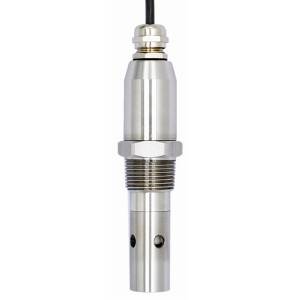
CS3743 Conductivity Sensor
Designed for Pure, Boiler Feed water, Power Plant, Condensate Water. -
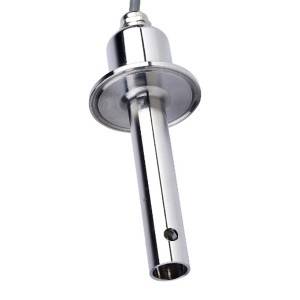
CS3852 Conductivity Sensor
Designed for Pure, Boiler Feed water, Power Plant, Condensate Water. -
CS3853 Conductivity Sensor
Designed for Pure, Boiler Feed water, Power Plant, Condensate Water. -
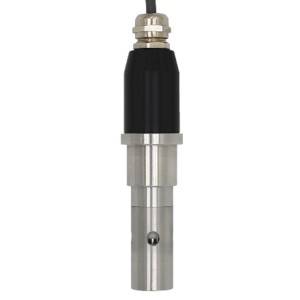
CS3953 Conductivity Sensor
Designed for Pure, Boiler Feed water, Power Plant, Condensate Water. -

Online Conductivity / Resistivity / TDS / Salinity Meter T6530
Industrial online conductivity meter is a microprocessor-based water quality online monitoring control instrument, the salinometer measures and supervises the salinity (salt content) by conductivity measurement in fresh water. The measured value is displayed as ppm and by comparing the measured value to a user defined alarm set point value, relay outputs are available to indicate if salinity is above or below the alarm set point value. -
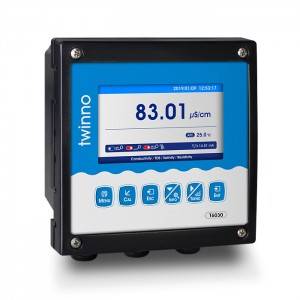
Online Conductivity / Resistivity / TDS / Salinity Meter T6030
Industrial online conductivity meter is a microprocessor-based water quality online monitoring control instrument, the salinometer measures and supervises the salinity (salt content) by conductivity measurement in fresh water. The measured value is displayed as ppm and by comparing the measured value to a user defined alarm set point value, relay outputs are available to indicate if salinity is above or below the alarm set point value. -

Online Conductivity / Resistivity / TDS / Salinity Meter T4030
Industrial online conductivity meter is a microprocessor-based water quality online monitoring control instrument, the salinometer measures and supervises the salinity (salt content) by conductivity measurement in fresh water. The measured value is displayed as ppm and by comparing the measured value to a user defined alarm set point value, relay outputs are available to indicate if salinity is above or below the alarm set point value. -
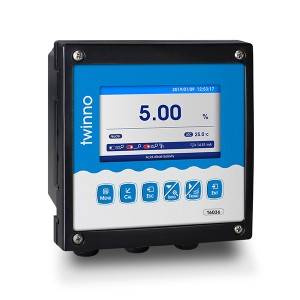
On-line Acid and Alkali Salt Concentration Meter T6036
Industrial online conductivity meter is a microprocessor-based water quality online monitoring control instrument, the salinometer measures and supervises the salinity (salt content) by conductivity measurement in fresh water. The measured value is displayed as percent and by comparing the measured value to a user defined alarm set point value, relay outputs are available to indicate if salinity is above or below the alarm set point value. -

CS3501C Conductivity Sensor Analyser
The electrode typically features two graphite elements (cells) with a defined surface area and spacing, housed within a durable, chemically resistant body. When immersed, an alternating current is applied to prevent polarization. The ions in the solution facilitate current flow between the electrodes, generating a signal proportional to the solution's conductivity. A built-in temperature sensor (e.g., Pt1000) is essential for automatic compensation, as conductivity is highly temperature-dependent. Modern versions often incorporate multiple cells (like four-electrode designs) to extend range and minimize fouling errors.
The primary advantage of graphite over platinum is its superior cost-effectiveness and robustness in harsh or fouling-prone environments, such as wastewater, cooling towers, or chemical processes where abrasion or coating is a concern. However, graphite may have limitations in very high-precision or ultra-pure water applications compared to advanced platinum cells. -

CS3701C EC & TDS Conductivity Sensor Probe with RS485 Output
graphite conductivity electrode is a core component in sensors designed for measuring the electrical conductivity of various liquids, particularly water-based solutions. As an alternative to traditional platinum electrodes, graphite models offer distinct advantages in specific applications due to their material properties. Conductivity, a key indicator of total dissolved ionic solids (TDS) and water purity, is critical for process control in industries ranging from pharmaceuticals and power generation to wastewater treatment and agriculture.
Conductivity sensor technology is an important field of engineering and technology research, used for the liquid conductivity measurement, is widely used in human production and life, as electric power, chemical industry, environmental protection, food, the semiconductor industry research and development, Marine industrial production and essential in the development of technology, a kind of testing and monitoring devices.The conductivity sensor is mainly used to measure and detect industrial production water, human living water, seawater characteristics and battery electrolyte properties. -

CS3540 Industrial Conductivity Sensor
Key advantages include excellent resistance to corrosion and coating, making it suitable for wastewater, aggressive chemicals, and high-solids slurries where platinum electrodes would rapidly degrade. Its rugged construction often allows for high-pressure and high-temperature operation. However, its primary limitation is a narrower measurement range compared to premium platinum cells, as graphite can polarize at very high conductivities.The graphite conductivity electrode is a robust and widely used sensor designed for measuring the electrical conductivity of aqueous solutions in demanding industrial, environmental, and process control applications. It offers a cost-effective and durable alternative to traditional platinum electrodes, particularly in media where fouling, abrasion, or chemical attack are concerns. When paired with a high-quality transmitter, the graphite conductivity electrode provides a reliable balance of performance and longevity for challenging on-line monitoring tasks, forming a critical component in modern water quality management. -

CS3601C Conductivity Sensor RS485 EC Probe
The graphite conductivity electrode is a robust and widely used sensor designed for measuring the electrical conductivity of aqueous solutions in demanding industrial, environmental, and process control applications. It offers a cost-effective and durable alternative to traditional platinum electrodes, particularly in media where fouling, abrasion, or chemical attack are concerns.
The electrode typically consists of two precisely spaced graphite elements (cells) encased within a chemically resistant body, such as PPS or epoxy. Graphite's inherent conductivity and porous structure provide a large effective surface area, ensuring stable signal generation. When an alternating current is applied, the ions in the solution complete the circuit between the electrodes; the measured conductance is directly proportional to the ion concentration. A built-in temperature sensor (usually a Pt1000 RTD) is essential for automatic temperature compensation, correcting readings to the standard reference of 25°C.
These electrodes are integral to systems monitoring water purity (e.g., RO permeate, ultrapure water), controlling chemical dosing in wastewater treatment, and managing concentration in industrial processes like cooling towers or food & beverage production. When paired with a high-quality transmitter, the graphite conductivity electrode provides a reliable balance of performance and longevity for challenging on-line monitoring tasks, forming a critical component in modern water quality management. -

CS3740 Industrial Conductivity Sensor Multiparameter Water Quality Sensor
Measuring specific conductivity of aqueous solutions is becoming increasingly important for determining impurities in water.The measurement accuracy is greatly affected by temperature variation, polarization of the contact electrode surface, cable capacitance, etc.Twinno has designed a variety of sophisticated sensors and meters that can handle these measurements even in extreme conditions.
Twinno's 4-electrode sensor has been proven to operate over a wide range of conductivity values. It is made of PEEK and is suitable for simple PG13/5 process connections.The electrical interface is VARIOPIN, which is ideal for this process.
Feature highlights:This RS485 2-in-1 industrial submersible sensor measures pH, EC, and temperature with high accuracy (±0.03pH; ±1.5% FS) and resolution (0.01pH; 0.1µS/cm). It operates in temperatures of 0-60°C, humidity up to 100% RH, and features an IP68 waterproof rating, making it ideal for water quality testing in harsh environments. -

On-line Acid, Alkali and Salt Concentration Meter Electromagnetic Conductivity Transmitter T6038
Industrial on-line water quality monitoring and control instrument with microprocessor. The instrument is widely used in thermal power, chemical industry, steel pickling and other industries, such as regeneration of ion exchange resin in power plant, chemical industry process, etc., to continuously detect and control the concentration of chemical acid or alkali in aqueous solution. -
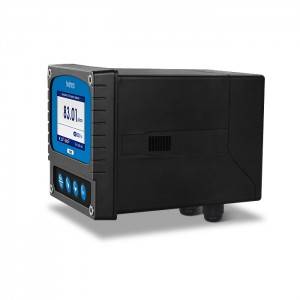
Industrial Online Conductivity/Salinity/TDS/Resistivity Meter T4030
Industrial online conductivity meter is a microprocessor-based water quality online monitoring control instrument, the salinometer measures and supervises the salinity (salt content) by conductivity measurement in fresh water. The measured value is displayed as ppm and by comparing the measured value to a user defined alarm set point value, relay outputs are available to indicate if salinity is above or below the alarm set point value.