

Digital Transmitter and Sensors Series
-

Digital Oil-in-Water Sensor CS6900CD
Commonly used oil-in-water detection methods include the suspension method (D/λ<=l), infrared
spectrophotometry (not suitable for low range), ultraviolet spectrophotometry (not suitable for high range), etc. The online oil-in-water sensor adopts the principle of the fluorescence method. Compared with several commonly used methods, the fluorescence method is more efficient, quicker, and more reproducible, and can be monitored online in real time. The sensor has better repeatability and stability. -
Online Chlorophyll Sensor RS485 Output Usable on Multiparameter Sonda CS6400D
The principle of CS6400D Chlorophyll Sensor is using the characteristics of chlorophyll A who has absorption peaks and emission peaks in the spectrum. The
absorption peaks emit monochromatic light into the water,chlorophyll A in the water absorbs the energy of monochromatic light,releasing monochromatic light of emission peak of another wavelength. The light intensity emitted by cyanobacteria is proportional to the content of chlorophyll A in water. -
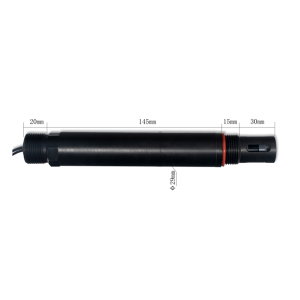
Water Online Digital RS485 Chloride Ion Selective Sensor for Water Monitoring CS6711AD
CS6711AD digital chloride ion sensor uses a solid membrane ion selective electrode for testing fluoride ions floating in water, which is fast, simple, accurate and economical.The design adopts the principle of single-chip solid ion selective electrode, with high measurement accuracy. Double salt bridge design, longer service life.The patented chloride ion probe, with an internal reference fluid at a pressure of at least 100KPa (1Bar), seeps extremely slowly from the microporous salt bridge. Such a reference system is very stable and the electrode life is longer than the ordinary. -

Digital RS485 Blue-green Algae Sensor for Water Quality Analysis CS6401CD
CS6041D blue-green algae sensor uses the characteristic of cyanobacteria having absorption peak and emission peak in the spectrum to emit monochromatic light of a specific wavelength to the water. Cyanobacteria in the water absorb the energy of this monochromatic light and release monochromatic light of another wavelength. The light intensity emitted by cyanobacteria is proportional to the content of cyanobacteria in the water.Based on the fluorescence of the pigments to measurement the target parameters , it can be identified before the impact of algal bloom.No need for extraction or other treatment, rapid detection, to avoid the impact of shelving water samples;Digital sensor, strong anti-interference ability, long transmission distance;Standard digital signal output can be integrated and networked with other devices without controller. -

T9008 BOD Water Quality On-line Automatic Monitor
BOD (Biochemical Oxygen Demand) Water Quality Online Automatic Monitor is an advanced instrument designed for continuous, real-time measurement of BOD concentration in water. BOD is a key indicator of the amount of biodegradable organic matter and the level of microbial activity in water, making its monitoring essential for assessing water pollution, evaluating wastewater treatment efficiency, and ensuring compliance with environmental regulations. Unlike traditional laboratory BOD tests, which require a 5-day incubation period (BOD₅), online monitors provide immediate data, enabling proactive process control and timely interventions. -
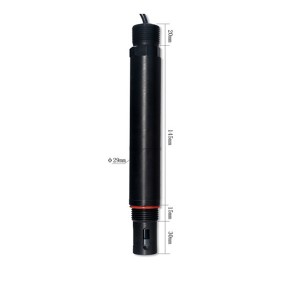
Digital Fluoride Ion Online ISE Probe for Wastewater Treatment Sensor CS6710AD
CS6710AD digital fluoride ion sensor uses a solid membrane ion selective electrode for testing fluoride ions floating in water, which is fast, simple, accurate and economical. The design adopts the principle of single-chip solid ion selective electrode, with high measurement accuracy. Double salt bridge design, longer service life.The patented fluoride ion probe, with an internal reference fluid at a pressure of at least 100KPa (1Bar), seeps extremely slowly from the microporous salt bridge. Such a reference system is very stable and the electrode life is longer than the ordinary. -

Factory Sales Online Ammonia Potassium ion Analyzer Meter 3/4NPT for wastewater CS6712AD
Easy to connect to PLC, DCS, industrial control computers, general purpose controllers, paperless recording instruments or touch screens and other third party devices.The CS6712AD potassium ion selective electrode is an effective method to measure the potassium ion content in the sample. Potassium ion selective electrodes are also often used in online instruments, such as industrial online potassium ion content monitoring. , Potassium ion selective electrode has the advantages of simple measurement, fast and accurate response. It can be used with PH meter, ion meter and online potassium ion analyzer, and also used in electrolyte analyzer, and ion selective electrode detector of flow injection analyzer. -

Online Ammonia Ammonium Ion-selective Electrodes Water Quality Monitoring RS485 4-20mA CS6714AD
Easy to connect to PLC, DCS, industrial control computers, general purpose controllers, paperless recording instruments or touch screens and other third party devices.The CS6714AD ammonium ion selective electrode is an effective method to measure the ammonium ion content in the sample. Ammonium ion selective electrodes are also often used in online instruments, such as industrial online ammonium ion content monitoring. Ammonium ion selective electrode has the advantages of simple measurement, fast and accurate response. It can be used with PH meter, ion meter and online ammonium ion analyzer, and also used in electrolyte analyzer, and ion selective electrode detector of flow injection analyzer. -

Industry Water Hardness Meter NH4 Ion Selective Electrode Sensor Probe RS485 CS6718AD
Easy to connect to PLC, DCS, industrial control computers, general purpose controllers, paperless recording instruments or touch screens and other third party devices.The CS6718AD water hardness ion selective electrode is an effective method to measure the calcium ion content in the sample. Calcium ion selective electrodes are also often used in online instruments, such as industrial online calcium ion
content monitoring. Calcium ion selective electrode has the advantages of simple measurement, fast and accurate response. It can be used with PH meter, ion meter and online calcium ion analyzer, and also used in electrolyte analyzer, and ion selective electrode detector of flow injection analyzer. -
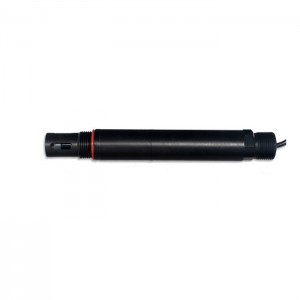
Nitrate Ion Selective Electrod RS485 Output Water quality sensor ca2+ ion Electrode for Waste Water CS6720AD
CS6720AD digital nitrate ion selective electrode is a kind of electrochemical sensor that uses membrane potential to measure the activity or concentration of ions in the solution. When it comes into contact with the solution containing the ions which are to be measured, it will generate contact with the sensor at the interface between its sensitive membrane and the solution. Ion activity is directly related to membrane potential. Ion selective electrodes are also called membrane electrodes. This type of electrode has a special electrode membrane that selectively responds to specific ions. The relationship between the potential of the electrode membrane and the ion content to be measured conforms to the Nernst formula. This type of electrode has the characteristics of good selectivity and short equilibrium time, making it the most commonly used indicator electrode for potential analysis -

T4070&CS7800D Turbidity Online Analyzer(Flow-through)
Turbidity Online Analyzer (Flow-through) is an advanced instrument designed for the continuous, real-time measurement of turbidity in liquid streams. It is widely applied in drinking water treatment, wastewater monitoring, industrial process control, and environmental protection.
Unlike traditional benchtop turbidimeters, this flow-through analyzer integrates a special flow cell that directs a sample stream directly through the optical measurement zone. Operating on the nephelometric principle (typically ISO 7027 or EPA 180.1), it uses an infrared or white light source to measure light scattered by suspended particles at a 90° angle. This design minimizes external light interference, ensures consistent sample presentation, and prevents bubble accumulation, all of which improve measurement accuracy and repeatability. -
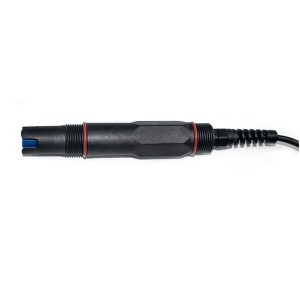
Calcium Ion Selective Electrode Water Quality Analysis CS6718S RS485 Digital Hardness
The calcium electrode is a PVC sensitive membrane calcium ion selective electrode with organic phosphorous salt as the active material, used to measure the concentration of Ca2+ ions in the solution.
Application of calcium ion: The calcium ion selective electrode method is an effective method to determine the calcium ion content in the sample. The calcium ion selective electrode is also often used in online instruments, such as industrial online calcium ion content monitoring, calcium ion selective electrode has the characteristics of simple measurement, fast and accurate response, and can be used with pH and ion meters and online calcium ion analyzers. It is also used in ion selective electrode detectors of electrolyte analyzers and flow injection analyzers. -
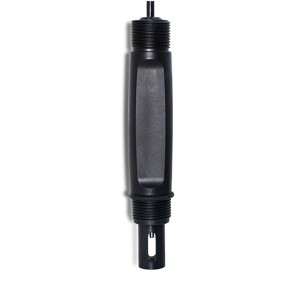
High Accuracy Digital Rs485 Tds Conductivity Meter Ec Meter And Sensor For Water CS3701D
CS3701D Digital Conductivity Sensor: Conductivity sensor technology is an important field of engineering technology research, suitable for low-conductivity applications in semiconductor, electric power, water and pharmaceutical industries. These sensors are compact and easy to use. Determining the specific conductivity of an aqueous solution is more and more important for determining the impurities in the water. The measurement accuracy is greatly affected by factors such as temperature changes, surface polarization of contact electrodes, and cable capacitance. -
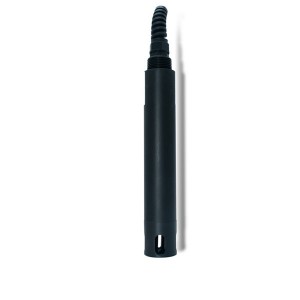
Online Electrode Digital Conductivity Sensor For Industrial Water RS485 tds sensor CS3740D
Measuring specific conductivity of aqueous solutions is becoming increasingly important for determining impurities in water.The measurement accuracy is greatly affected by temperature variation, polarization of the contact electrode surface, cable capacitance, etc.Twinno has designed a variety of sophisticated sensors and meters that can handle these measurements even in extreme conditions.ItismadeofPEEKandissuitableforsimpleNPT3/4”process connections.Theelectricalinterfaceiscustomizable,whichisidealforthisprocess. Thesesensorsaredesignedforaccuratemeasurementsoverawideelectrical conductivityrangeandaresuitableforuseinthepharmaceutical,foodandbeverage industries,whereproductandcleaningchemicalsneedtobemonitored. -
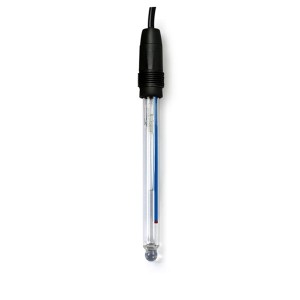
Industrial lab Water Glass Electrode PH sensor Conductivity Probe EC DO ORP CS1529
Designed for seawater environment.
The outstanding application of SNEX CS1529 pH electrode in seawater pH measurement.
1.Solid-state liquid junction design: The reference electrode system is a non-porous, solid, non-exchange reference system. Completely avoid various problems caused by the exchange and blockage of the liquid junction,such as the reference electrode is easy to be polluted, reference vulcanization poisoning, reference loss and other problems.
2.Anti-corrosion material: In the strongly corrosive seawater, the SNEX CS1529 pH electrode is made of marine titanium alloy material to ensure the stable performance of the electrode.