

Digital Conductivity Sensor
-
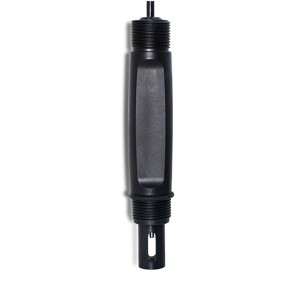
High Accuracy Digital Rs485 Tds Conductivity Meter Ec Meter And Sensor For Water CS3701D
CS3701D Digital Conductivity Sensor: Conductivity sensor technology is an important field of engineering technology research, suitable for low-conductivity applications in semiconductor, electric power, water and pharmaceutical industries. These sensors are compact and easy to use. Determining the specific conductivity of an aqueous solution is more and more important for determining the impurities in the water. The measurement accuracy is greatly affected by factors such as temperature changes, surface polarization of contact electrodes, and cable capacitance. -
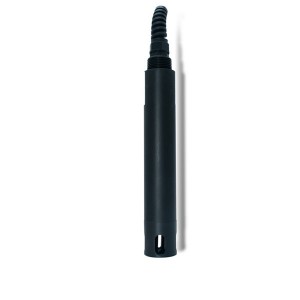
Online Electrode Digital Conductivity Sensor For Industrial Water RS485 tds sensor CS3740D
Measuring specific conductivity of aqueous solutions is becoming increasingly important for determining impurities in water.The measurement accuracy is greatly affected by temperature variation, polarization of the contact electrode surface, cable capacitance, etc.Twinno has designed a variety of sophisticated sensors and meters that can handle these measurements even in extreme conditions.ItismadeofPEEKandissuitableforsimpleNPT3/4”process connections.Theelectricalinterfaceiscustomizable,whichisidealforthisprocess. Thesesensorsaredesignedforaccuratemeasurementsoverawideelectrical conductivityrangeandaresuitableforuseinthepharmaceutical,foodandbeverage industries,whereproductandcleaningchemicalsneedtobemonitored. -

Salinity Tester Meter For Aquaculture Digital Monitor Water Quality Analyser CS3743D
Product Description
For continuous monitoring and control of conductivity / TDS and temperature values of aqueous solutions. Widely used in power plants, petrochemical, metallurgy, paper industry, environmental water treatment, light industrial electronics and other fields. For example, monitoring and control of raw water and water quality of water production equipment such as power plant cooling water, recharge water, saturated water, condensate water and furnace water, ion exchange, reverse osmosis EDL,seawater distillation.The sensor is made from a combination of FDA-approved fluid receiving materials.This makes them ideal for monitoring pure water systems for the preparation of injectable solutions and similar applications.In this application, the sanitary crimping method is used for installation. -

Digital Conductivity Sensor Online TDS Sensor Electrode For Industrial Water RS485 CS3740PCD
Measuring specific conductivity of aqueous solutions is becoming increasingly important for determining impurities in water.The measurement accuracy is greatly affected by temperature variation, polarization of the contact electrode surface, cable capacitance, etc.Twinno has designed a variety of sophisticated sensors and meters that can handle these measurements even in extreme conditions.ItismadeofPEEKandissuitableforsimpleNPT3/4”process connections.Theelectricalinterfaceiscustomizable,whichisidealforthisprocess. Thesesensorsaredesignedforaccuratemeasurementsoverawideelectrical conductivityrangeandaresuitableforuseinthepharmaceutical,foodandbeverage industries,whereproductandcleaningchemicalsneedtobemonitored. -

CS3733CD Digital Conductivity Sensor
Designed for Pure, Boiler Feed water, Power Plant, Condensate Water.
Easy to connect to PLC, DCS, industrial control computers, general purpose controllers, paperless recording instruments or touch screens and other third party devices.
Conductivity sensor technology is an important field of engineering and technology research, used for the liquid conductivity measurement, is widely used in human production and life, as electric power, chemical industry, environmental protection, food, the semiconductor industry research and development, Marine industrial production and essential in the development of technology, a kind of testing and monitoring devices.The conductivity sensor is mainly used to measure and detect industrial production water, human living water, seawater characteristics and battery electrolyte properties. -

Digital Conductivity Sensor For Water CS3701CD
Designed for Pure, Boiler Feed water, Power Plant, Condensate Water.
Easy to connect to PLC, DCS, industrial control computers, general purpose controllers, paperless recording instruments or touch screens and other third party devices.
Conductivity sensor technology is an important field of engineering and technology research, used for the liquid conductivity measurement, is widely used in human production and life, as electric power, chemical industry, environmental protection, food, the semiconductor industry research and development, Marine industrial production and essential in the development of technology, a kind of testing and monitoring devices.The conductivity sensor is mainly used to measure and detect industrial production water, human living water, seawater characteristics and battery electrolyte properties. -
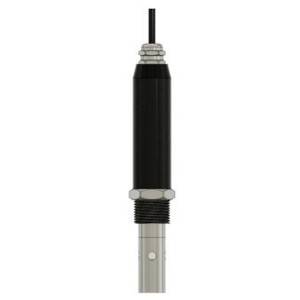
CS3742D Conductivity Sensor
conductivity sensor is an analytical device for measuring the electrical conductivity of a liquid, which directly reflects its total ion concentration and purity. It operates on the principle of applying an alternating voltage between two or four electrode rings (typically made of graphite or platinum) to prevent polarization. The sensor includes a built‑in temperature sensor for automatic temperature compensation (ATC), ensuring accurate readings across varying temperatures. Conductivity sensors are widely used in water treatment (e.g., reverse osmosis, boiler feedwater), industrial process control, aquaculture, hydroponics, and environmental monitoring. They can measure from ultra‑pure water (0.055 µS/cm) to high‑concentration brines (up to 2000 mS/cm). Output options include 4‑20 mA, RS‑485 (Modbus), or digital protocols, enabling seamless integration into SCADA or IoT platforms. The sensor is housed in a durable, waterproof (IP68) body with anti‑fouling materials. Regular calibration ensures long‑term stability. By delivering real‑time conductivity data, the sensor helps operators optimize chemical dosing, monitor product quality, protect equipment from corrosion or scaling, and ensure regulatory compliance. It is an essential, cost‑effective tool for continuous, unattended water quality monitoring in both industrial and environmental applications. -

CS3740D Digital Conductivity Electrode
Digital Conductivity Electrode is an online sensor for measuring the electrical conductivity of a solution, which directly indicates its total ionic concentration. It operates using a two‑ or four‑electrode design (graphite or platinum) with an applied alternating current to prevent polarization. The sensor features a built‑in temperature sensor for automatic temperature compensation (ATC) and directly outputs calibrated readings in μS/cm or mS/cm via RS‑485 (Modbus RTU). Its digital output eliminates signal errors common in analog sensors and supports plug‑and‑play connectivity, remote calibration, and self‑diagnostics. The electrode has a wide measurement range (e.g., 0‑2000 μS/cm to 0‑2000 mS/cm) and a rugged, waterproof (IP68) housing for long‑term stability in harsh environments. Typical applications include water treatment, reverse osmosis, cooling towers, chemical process control, aquaculture, and environmental monitoring. The digital conductivity electrode requires no reagent, no sample preparation, and provides real‑time, continuous data. It helps optimize chemical dosing, protect equipment from scaling or corrosion, ensure product quality, and maintain regulatory compliance. Compared to analog sensors, the digital version simplifies system integration, reduces maintenance, and provides more reliable data for unattended, continuous water quality monitoring in industrial, municipal, and environmental applications. -

CE Digital Salinity/Ec/Conductivity Meter Ultra Pure Water Sensor CS3743D
For continuous monitoring and control of conductivity / TDS and temperature values of aqueous solutions. Widely used in power plants, petrochemical, metallurgy, paper industry, environmental water treatmen and other fields. For example, monitoring and control of raw water and water quality of water production equipment such as recharge water, saturated water, condensate water and furnace water, ion exchange, reverse osmosis EDL,seawater distillation 。Digital Salinity Meter is an online analytical device for continuous measurement of salinity in water, typically expressed in practical salinity units (PSU), parts per thousand (ppt), or mg/L (ppm). It operates by measuring electrical conductivity (µS/cm or mS/cm) and converting the value to salinity using a built‑in algorithm and automatic temperature compensation (ATC), ensuring accurate readings over a wide temperature range (e.g., 0–60°C). The sensor directly outputs measurement data via RS‑485 (Modbus RTU) or 4–20 mA, enabling plug‑and‑play integration into SCADA or IoT monitoring platforms. It features a rugged, waterproof (IP68) housing, fast response, and low maintenance. Typical applications include seawater monitoring, aquaculture (fish/shrimp farming to control osmotic stress), ballast water treatment, industrial wastewater, desalination plant feedwater and brine monitoring, and agricultural drainage. Measurement ranges typically cover 0–70 PSU (or 0–70000 mg/L). Unlike traditional refractometers or hydrometers, the digital sensor provides real‑time, continuous data without manual sampling or laboratory analysis. By delivering continuous, reliable salinity readings, the digital salinity meter helps optimize irrigation, protect aquatic life, ensure discharge compliance, and reduce operational and maintenance costs. Its plug‑and‑play design makes it an essential tool for both field and industrial water quality monitoring. -

CS3742D Conductivity Sensor
digital conductivity sensor is an advanced instrument for measuring the electrical conductivity of liquids, indicating total ionic concentration. It directly outputs calibrated readings in μS/cm or mS/cm via RS‑485 (Modbus RTU), eliminating signal conversion errors common in analog sensors. The sensor features two or four graphite or platinum electrodes with automatic temperature compensation (ATC) and a wide measurement range (e.g., 0‑2000 μS/cm to 0‑2000 mS/cm). Its smart design enables plug‑and‑play connection, remote calibration, and self‑diagnostics. Widely used in water treatment, reverse osmosis, chemical process, and aquaculture, the digital conductivity sensor provides reliable, real‑time data for industrial control and environmental monitoring.
-
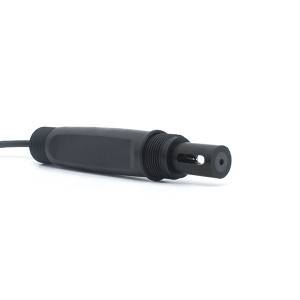
CS3701D Digital Conductivity Sensor
digital conductivity sensor is an advanced instrument for measuring the electrical conductivity of liquids, indicating total ionic concentration. It directly outputs calibrated readings in μS/cm or mS/cm via RS‑485 (Modbus RTU), eliminating signal conversion errors common in analog sensors. The sensor features two or four graphite or platinum electrodes with automatic temperature compensation (ATC) and a wide measurement range (e.g., 0‑2000 μS/cm to 0‑2000 mS/cm). Its smart design enables plug‑and‑play connection, remote calibration, and self‑diagnostics. Widely used in water treatment, reverse osmosis, chemical process, and aquaculture, the digital conductivity sensor provides reliable, real‑time data for industrial control and environmental monitoring. -

CS3501D Digital Conductivity Sensor
Measuring specific conductivity of aqueous solutions is becoming increasingly important for determining impurities in water. The measurement accuracy is greatly affected by temperature variation, polarization of the contact electrode surface, cable capacitance, etc.Twinno has designed a variety of sophisticated sensors and meters that can handle these measurements even in extreme conditions.
Suitable for low conductivity applications in the semiconductor, power, water and pharmaceutical industries, these sensors are compact and easy to use.The meter can be installed in several ways, one of which is through the compression gland, which is a simple and effective method of direct insertion into the process pipeline.
The sensor is made from a combination of FDA-approved fluid receiving materials. This makes them ideal for monitoring pure water systems for the preparation of injectable solutions and similar applications.In this application, the sanitary crimping method is used for installation. -

CS3533CD Digital EC Sensor
Conductivity sensor technology is an important field of engineering and technology research, used for the liquid conductivity measurement, is widely used in human production and life, as electric power, chemical industry, environmental protection, food, the semiconductor industry research and development, Marine industrial production and essential in the development of technology, a kind of testing and monitoring devices.The conductivity sensor is mainly used to measure and detect industrial production water, human living water, seawater characteristics and battery electrolyte properties. -

Digital conductivity sensor series CS3742D
Digital Conductivity Sensor: Digital Conductivity Sensor is an online instrument for continuous measurement of electrical conductivity in liquids, directly indicating total ionic concentration (salinity, TDS). It operates on a two‑ or four‑electrode design (graphite or platinum) with an alternating current to prevent polarization. The sensor features a built‑in temperature sensor for automatic temperature compensation (ATC) and directly outputs calibrated readings in μS/cm or mS/cm via RS‑485 (Modbus RTU). Its digital output eliminates signal errors and supports plug‑and‑play connectivity, remote calibration, and self‑diagnostics. With a wide measurement range (0‑2000 μS/cm to 0‑2000 mS/cm) and rugged, waterproof (IP68) housing, it suits water treatment, reverse osmosis, cooling towers, aquaculture, and industrial process control. Real‑time, continuous data helps optimize chemical dosing, protect equipment from scaling or corrosion, ensure product quality, and maintain regulatory compliance. Compared to analog sensors, the digital version simplifies system integration, reduces maintenance, and provides reliable data for unattended water quality monitoring. It requires no reagents or sample preparation, making it an essential, cost‑effective tool for environmental and industrial applications.