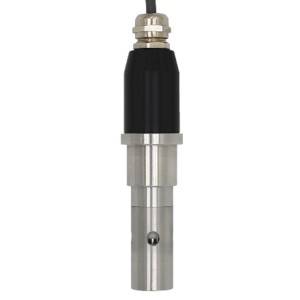
CS3501C Conductivity Sensor Analyser

Short Description:

The electrode typically features two graphite elements (cells) with a defined surface area and spacing, housed within a durable, chemically resistant body. When immersed, an alternating current is applied to prevent polarization. The ions in the solution facilitate current flow between the electrodes, generating a signal proportional to the solution's conductivity. A built-in temperature sensor (e.g., Pt1000) is essential for automatic compensation, as conductivity is highly temperature-dependent. Modern versions often incorporate multiple cells (like four-electrode designs) to extend range and minimize fouling errors.
The primary advantage of graphite over platinum is its superior cost-effectiveness and robustness in harsh or fouling-prone environments, such as wastewater, cooling towers, or chemical processes where abrasion or coating is a concern. However, graphite may have limitations in very high-precision or ultra-pure water applications compared to advanced platinum cells.


  • Model No.: CS3501C
  • Waterproof rating: IP68
  • Temperature compensation: NTC10K, customizable
  • Installation thread: PG13.5
  • Connection methods: 4 core cable

Product Detail

Product Tags

CS3501C Conductivity Sensor

Specifications:

Electrical conductivity range: 0~30000 μS/cm

TDS range: 0~15000 mg/L

Salinity range: 0~18000ppm

Electrode mode: Bipolar

Electrode constant: K≈1.0

Material measurement: graphite

Shell material: ABS

temperature :0-60℃

Pressure resistance: 0-0.3Mpa

Temperature sensing: NTC10K, customizable

Mounting interface: PG13.5

Connection method: 4core integrated cable

Number of order:

name

content

number


temperature sensor

NTC10K N1
NTC2.2K N2
PT100 P1
PT1000 P2


Cable length

5m m5
10m m10
15m m15
20m m20


Cable connector

tin-plated wire A1
Y male tab A2
one-word insertion A3
BNC A4


  • Previous:
  • Next:

  • Write your message here and send it to us