

Ion Transmitter/Ion Sensor
-

CS6518A-S8 Hardness (Calcium Ion) Electrode Online Ion Selective Sensor
Chloride Ion Electrode is an analytical sensor designed for the rapid, accurate measurement of chloride ion (Cl⁻) concentration in aqueous solutions. Widely used in water quality monitoring, industrial process control, and environmental testing, it operates on the principle of potentiometry. The electrode features a solid-state or PVC membrane sensitive to chloride ions, generating an electrical potential proportional to the ion activity. When paired with a reference electrode and calibrated with standard solutions, it delivers reliable readings across a broad concentration range. With fast response, high selectivity, and minimal sample preparation, it is an essential tool for applications such as drinking water safety, wastewater treatment, and corrosion monitoring. -

CS6520W-SE Nitrate (nitrate ion) electrode
Nitrogen Monitor Water Quality Analyzer is an advanced online instrument designed for the continuous and accurate measurement of nitrogen compounds in water, including total nitrogen, ammonia nitrogen, nitrate nitrogen, and nitrite nitrogen. Excessive nitrogen levels from agricultural runoff, industrial wastewater, or domestic sewage can lead to eutrophication, causing algal blooms, oxygen depletion, and aquatic life destruction. The analyzer typically employs chemical digestion and colorimetric detection methods, converting various nitrogen forms into measurable signals with high precision and low detection limits. Featuring automatic calibration, multi-parameter monitoring, and real-time data transmission, it ensures reliable compliance with environmental regulations. As an essential tool for wastewater treatment, drinking water protection, and ecological monitoring, this analyzer helps safeguard water resources and public health. -

T6016 Nitrogen Nitrate Monitor Water Quality Analyzer
Nitrate Monitor is an analytical device used for the continuous or online measurement of nitrate nitrogen (NO₃⁻-N) concentration in water. It is essential for environmental monitoring, wastewater treatment, and drinking water safety. Nitrate, a common contaminant from agricultural runoff and industrial discharge, can pose serious health risks such as methemoglobinemia in infants. The monitor typically employs ion-selective electrode (ISE) technology or UV absorption spectroscopy. ISE-based sensors offer high selectivity and real-time response, while UV sensors provide reagent-free, rapid detection. With built-in temperature compensation, data logging, and alarm functions, nitrate monitors ensure reliable compliance with regulatory limits. They are indispensable tools for protecting water quality and public health. -

CS6511A-K9 Chloride Ion Electrode Digital RS485 Online Ion Selective Electrode Sensor
Chloride Ion Electrode is an analytical sensor designed for the rapid, accurate measurement of chloride ion (Cl⁻) concentration in aqueous solutions. Widely used in water quality monitoring, industrial process control, and environmental testing, it operates on the principle of potentiometry. The electrode features a solid-state or PVC membrane sensitive to chloride ions, generating an electrical potential proportional to the ion activity. When paired with a reference electrode and calibrated with standard solutions, it delivers reliable readings across a broad concentration range. With fast response, high selectivity, and minimal sample preparation, it is an essential tool for applications such as drinking water safety, wastewater treatment, and corrosion monitoring. -

W8589S Nitrogen Monitor Water Quality Analyzer
Nitrogen Monitor Water Quality Analyzer is an advanced online instrument designed for the continuous and accurate measurement of nitrogen compounds in water, including total nitrogen, ammonia nitrogen, nitrate nitrogen, and nitrite nitrogen. Excessive nitrogen levels from agricultural runoff, industrial wastewater, or domestic sewage can lead to eutrophication, causing algal blooms, oxygen depletion, and aquatic life destruction. The analyzer typically employs chemical digestion and colorimetric detection methods, converting various nitrogen forms into measurable signals with high precision and low detection limits. Featuring automatic calibration, multi-parameter monitoring, and real-time data transmission, it ensures reliable compliance with environmental regulations. As an essential tool for wastewater treatment, drinking water protection, and ecological monitoring, this analyzer helps safeguard water resources and public health. -
CS6518A-K9 Hardness (Calcium Ion) Electrode
Chloride Ion Electrode is an analytical sensor designed for the rapid, accurate measurement of chloride ion (Cl⁻) concentration in aqueous solutions. Widely used in water quality monitoring, industrial process control, and environmental testing, it operates on the principle of potentiometry. The electrode features a solid-state or PVC membrane sensitive to chloride ions, generating an electrical potential proportional to the ion activity. When paired with a reference electrode and calibrated with standard solutions, it delivers reliable readings across a broad concentration range. With fast response, high selectivity, and minimal sample preparation, it is an essential tool for applications such as drinking water safety, wastewater treatment, and corrosion monitoring. -

W8588CA Hardness (Calcium Ion) Monitor
Hardness (Calcium Ion) Monitor is an online analytical instrument designed for continuous, real-time measurement of calcium ion (Ca²⁺) concentration in water. It plays a critical role in industrial water treatment, boiler feedwater, cooling towers, and drinking water quality control. By utilizing ion-selective electrode (ISE) technology, the monitor detects calcium activity with high accuracy and stability. It features automatic temperature compensation, minimal maintenance, and a user-friendly interface. With its ability to provide instant alerts and data logging, the monitor helps prevent scale formation, optimize chemical dosing, and ensure compliance with water quality standards, making it an essential tool for efficient water hardness management. -

Nitrate Ion Selective Electrode For Waste Water Treatment Monitoring CS6720
Our Ion Selective Electrodes have several advantages over colorimetric, gravimetric, and other methods:
They can be used from 0.1 to 10,000 ppm.
The ISE electrode bodies are shock-proof and chemically-resistant.
The Ion Selective Electrodes, once calibrated, can monitor concentration continuously and analyze the sample within 1 to 2 minutes.
The Ion Selective Electrodes can be placed directly into the sample without sample pretreatment or destruction of the sample.
Best of all, Ion Selective Electrodes are inexpensive and great screening tools for identifying dissolved salts in samples. -

Industrial Online Fluoride Ion Concentration Transmitter T6510
Industrial online Ion meter is an online water quality monitoring and control instrument with microprocessor. It can be equipped with Ion
selective sensor of Fluoride, Chloride, Ca2+, K+, NO3-, NO2-, NH4+, etc.The instrument is widely used in industrial waste water, surface water, drinking water, sea water, and industrial process control ions on-line automatic testing and analysis, etc. Continuously monitor and control Ion concentration and temperature of aqueous solution. -
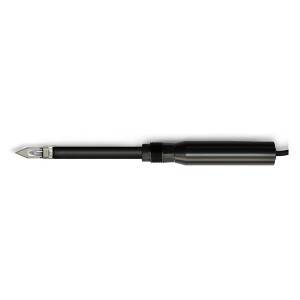
CS1515 pH Sensor
Designed for moist soil measurement.
The reference electrode system of CS1515 pH sensor is a non-porous, solid, non-exchange reference system. Completely avoid various problems caused by the exchange and blockage of the liquid junction,such as the reference electrode is easy to be polluted, reference vulcanization poisoning, reference loss and other problems. -

CS6712 Potassium Ion Sensor
The potassium ion selective electrode is an effective method to measure the potassium ion content in the sample. Potassium ion selective electrodes are also often used in online instruments, such as industrial online potassium ion content monitoring. , Potassium ion selective electrode has the advantages of simple measurement, fast and accurate response. It can be used with PH meter, ion meter and online potassium ion analyzer, and also used in electrolyte analyzer, and ion selective electrode detector of flow injection analyzer. -

CS6512 Potassium Ion Sensor
The potassium ion selective electrode is an effective method to measure the potassium ion content in the sample. Potassium ion selective electrodes are also often used in online instruments, such as industrial online potassium ion content monitoring. , Potassium ion selective electrode has the advantages of simple measurement, fast and accurate response. It can be used with PH meter, ion meter and online potassium ion analyzer, and also used in electrolyte analyzer, and ion selective electrode detector of flow injection analyzer. -

CS6718 Hardness Sensor (Calcium)
The calcium electrode is a PVC sensitive membrane calcium ion selective electrode with organic phosphorous salt as the active material, used to measure the concentration of Ca2+ ions in the solution.
Application of calcium ion: The calcium ion selective electrode method is an effective method to determine the calcium ion content in the sample. The calcium ion selective electrode is also often used in online instruments, such as industrial online calcium ion content monitoring, calcium ion selective electrode has the characteristics of simple measurement, fast and accurate response, and can be used with pH and ion meters and online calcium ion analyzers. It is also used in ion selective electrode detectors of electrolyte analyzers and flow injection analyzers. -
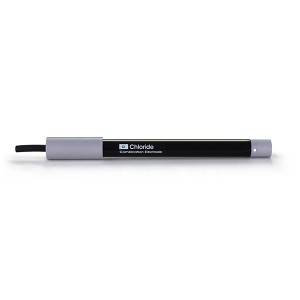
CS6511 Chloride Ion Sensor
The online chloride ion sensor uses a solid membrane ion selective electrode for testing chloride ions floating in water, which is fast, simple, accurate and economical. -
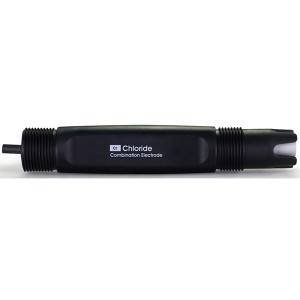
CS6711 Chloride Ion Sensor
The online chloride ion sensor uses a solid membrane ion selective electrode for testing chloride ions floating in water, which is fast, simple, accurate and economical.