

Water quality monitoring is one of the main tasks in environmental monitoring work. It provides accurate, timely, and comprehensive reflection of the current status and development trends of water quality, offering scientific basis for water environment management, pollution source control, and environmental planning. It plays a vital role in the overall protection of the water environment, water pollution control, and maintaining water environment health.
Shanghai Chunye is committed to the service tenet of “transforming ecological environmental advantages into eco-economic advantages.” Its business scope mainly focuses on the R&D, production, sales, and service of industrial process control instruments, online automatic water quality monitors, VOCs (volatile organic compounds) online monitoring systems and TVOC online monitoring alarm systems, IoT data acquisition, transmission and control terminals, CEMS continuous flue gas monitoring systems, dust and noise online monitors, air monitoring, and other series of products.
 Recently, the technical service team of Shanghai Chunye Instrument Technology Co., Ltd. (Chunye Technology) traveled to a sewage treatment plant in Pingwu County, Mianyang City, Sichuan Province, to complete the full on-site installation, pipeline layout, communication commissioning, and trial operation of four online automatic water quality monitors: T9000 CODcr, T9001 Ammonia Nitrogen, T9002 Total Phosphorus, and T9003 Total Nitrogen. The complete pollution source online monitoring system has been officially delivered and put into use at the plant, establishing a digital monitoring line for sewage treatment in Pingwu County and water environment supervision of the Fujiang River Basin.
I. Project Background
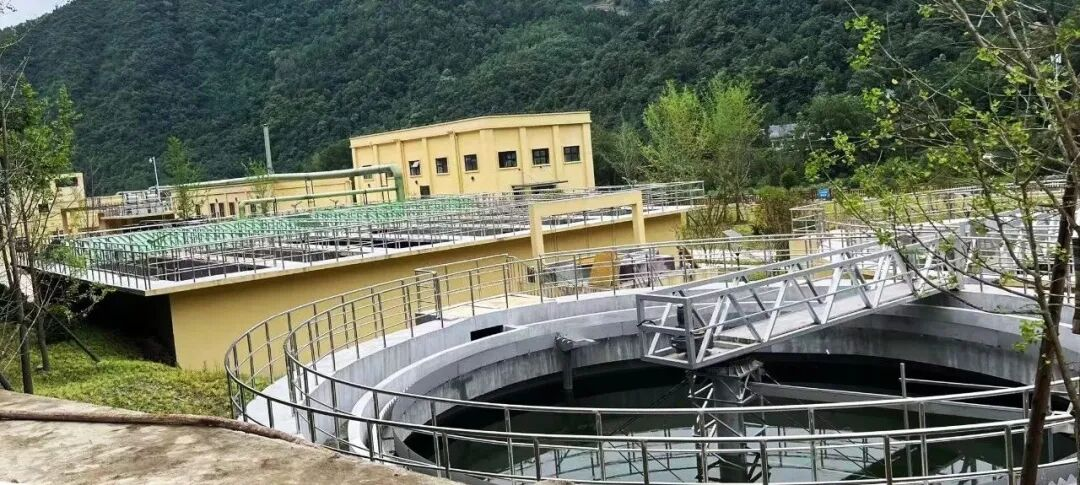
Pingwu County lies in the upper reaches of the Fujiang River and serves as a critical regional water‑conservation zone. Its local wastewater treatment plant undertakes centralized disposal of municipal domestic sewage and a small volume of industrial wastewater. Previously the plant adopted manual periodic sampling and off‑site laboratory testing, which suffered obvious drawbacks: delayed data output, inability to capture real‑time water‑quality shock loads, and failure to meet the authority’s requirements for round‑the‑clock online supervision. Driven by the plant’s upgrading and renovation project, a stable, easy‑to‑maintain complete solution of online automatic water‑quality monitors capable of direct connection to environmental‑protection supervision platforms was urgently required.
After multiple rounds of solution comparison and equipment‑performance verification, the client finally selected Chunye T9000‑series four‑parameter complete online monitoring system. It covers four core pollution‑discharge control indicators: COD, ammonia‑nitrogen, total phosphorus and total nitrogen, fully complying with national standards for pollutant‑discharge permits and online pollution‑source monitoring.
II. Supplied Monitoring Equipment & Advantages

All four deployed Chunye online automatic water‑quality monitors adopt national‑standard spectrophotometric measurement methods, delivering precise readings and good adaptability to complex sewage matrices. Key performance strengths are listed below:
1. Model T9000 CODcr Online Automatic Water‑Quality Monitor
Adopts potassium‑dichromate oxidation spectrophotometry. Customizable measuring range: 0‑100 ~ 10000 mg/L; maximum chloride masking capacity up to 20000 mg/L. Digestion duration is configurable; a single measurement finishes within 50 minutes. Low indication error; repeatability ≤5 %. Suitable for monitoring mixed high‑strength industrial and domestic sewage. Equipped with 2‑channel 4‑20 mA analog outputs plus dual communication interfaces RS485/RS232, enabling seamless data connection to environmental‑protection data acquisition units and supervision platforms
2. Model T9001 Ammonia‑Nitrogen Online Automatic Water‑Quality Monitor
Salicylic‑acid spectrophotometry. Lower limit of quantification reaches 0.15 mg/L; repeatability ≤2 %; 24‑hour low‑concentration drift ≤0.02 mg/L, ideal for fine monitoring of low‑concentration effluent. Measurement cycle shorter than 30 minutes; three measurement modes available: fixed‑hour, scheduled and trigger‑based, matching regular effluent monitoring requirements of wastewater plants.
3. Model T9002 Total‑Phosphorus Online Automatic Water‑Quality Monitor
Ammonium‑molybdate spectrophotometry. Multiple selectable ranges up to 0‑100 mg/L. High‑temperature digestion at 120 °C accurately quantifies phosphorus content and assesses eutrophication risks. Zero‑point and span drift stably controlled within ±10 %. Built‑in automatic pipeline cleaning function reduces clogging failures caused by high‑suspended‑solids wastewater.
4. Model T9003 Total‑Nitrogen Online Automatic Water‑Quality Monitor
Potassium‑persulfate oxidation‑resorcinol spectrophotometry. Full‑range sewage monitoring covering 0‑500 mg/L. Accurately detects total‑nitrogen pollutants from domestic sewage, farmland drainage and chemical‑industry wastewater, supplying continuous data for water self‑purification and eutrophication‑risk evaluation.
III. Universal Core Advantages Across the Series

——Ultra‑low operation‑and‑maintenance cost: Unified maintenance interval >1 month; each maintenance takes only 5 minutes. One‑click maintenance function supports automatic waste‑liquid draining, pipeline flushing and auto‑calibration verification, eliminating repeated manual pipeline disassembly.
——Stable long‑term operation: Built‑in self‑diagnosis & protection system. Historical monitoring data of up to 5 years will not be lost upon power‑off or abnormal alarms. After power restoration, residual reagents are automatically drained and measurement resumes, realizing true 7×24‑hour unattended operation.
——Flexible installation options: Floor‑standing cabinet unit (1460×430×382 mm) deployed for this indoor station‑room project; wall‑mount variant (740×430×332 mm) is also available for compact equipment rooms and discharge outlets. Total power consumption ≤150 W, standard AC220 V power supply compatible with conventional power distribution in wastewater plants.
——Full‑digital output: Standard discrete‑input channels, dual digital communication ports plus two analog outputs. Simultaneous connection to plant central control system and ecological‑environment bureau online supervision platform; automatic alarm for out‑of‑limit values with real‑time data uploading and archiving.
IV. On‑Site Installation & Commissioning Workflow

Upon arrival at the Pingwu site, Chunye technical engineers formulated a standardized construction scheme according to the layout of the effluent‑monitoring station, sampling points on discharge pipelines, and indoor constant‑temperature conditions (5‑28 °C):
- Fix equipment cabinets, lay power‑supply cables and pre‑treated water‑sample pipelines to prevent sewage corrosion and pipeline leakage.
- Fill reagents for each unit, perform zero‑point / span calibration, conduct multiple standard‑sample comparisons to verify indication error, repeatability and drift performance.
- Establish RS485 communication with environmental‑protection data acquisition unit, configure HJ212 standard data‑transmission protocol and complete joint platform debugging.
- Run continuous 72‑hour non‑stop trial operation; cross‑validate against manual laboratory test results to confirm measurement deviation meets regulatory specifications.
- Deliver hands‑on training for plant operation‑and‑maintenance staff, covering daily workflows including one‑click maintenance, auto‑calibration and fault self‑check.
After installation and commissioning, the complete system monitors real‑time effluent concentrations of COD, ammonia‑nitrogen, total phosphorus and total nitrogen 24‑7. Alarms trigger immediately once values exceed discharge standards, enabling plant operators to adjust biochemical treatment processes promptly, eliminate over‑limit discharge risks at source, cut manual‑testing workload, and support regular basin‑scale water‑quality management in Pingwu County.
V. Project Significance
The deployment of Chunye’s complete online automatic water‑quality monitors at the Pingwu wastewater treatment plant in Mianyang marks another benchmark case for smart municipal‑wastewater‑treatment monitoring delivered by Chunye Technology within Sichuan Province. Once fully operational, the system forms an integrated digital management loop: Real‑time Monitoring → Data Uploading → Over‑Limit Alarm → Process Adjustment.
Satisfies mandatory regulatory requirements for online pollution‑source surveillance; stores 5‑year full monitoring records for environmental‑protection audits. Enables fine‑tuning of denitrification and dephosphorization processes for wastewater plants, cutting chemical‑reagent and energy‑consumption operating costs. Keeps real‑time track of discharged water quality in upper Fujiang River, mitigates eutrophication risks, and safeguards aquatic‑environment and basin‑ecological security across Pingwu County.
Going forward, Shanghai Chunye Instrument Technology will further deepen its focus on online water‑quality monitoring, continuously optimize performance of the T9000‑series COD, ammonia‑nitrogen, total‑phosphorus and total‑nitrogen online monitors. We will provide one‑stop online water‑quality‑monitoring solutions for municipal wastewater plants, industrial parks, river cross‑sections and water‑source sites nationwide, and drive digital transformation of water‑environment governance with intelligent monitoring instruments.
Post time: Aug-07-2026