


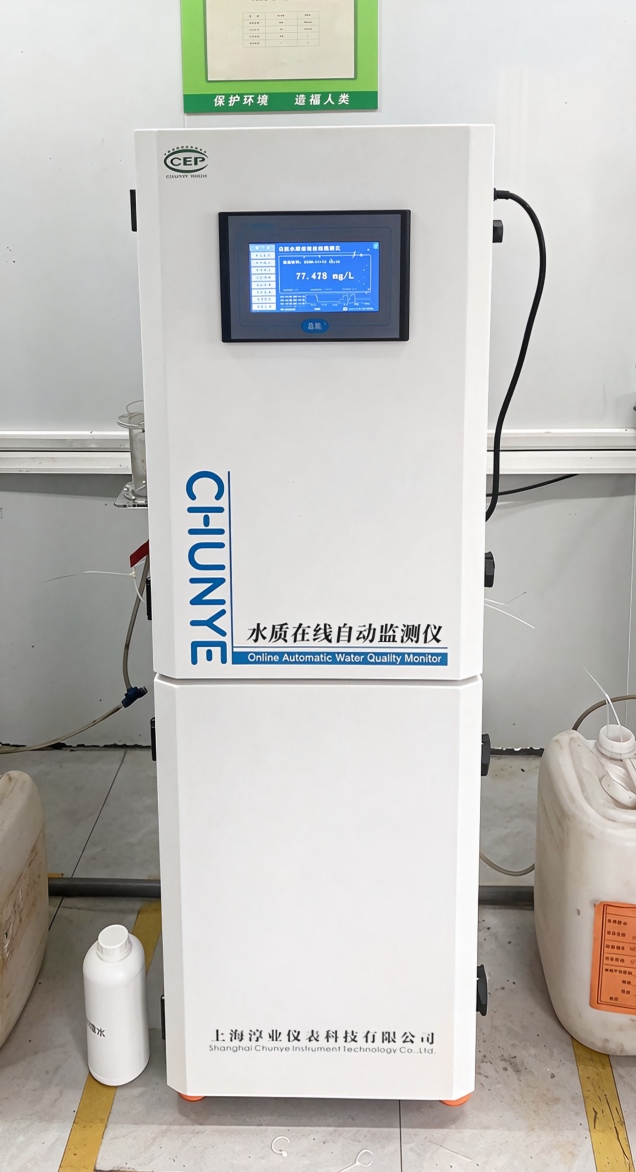
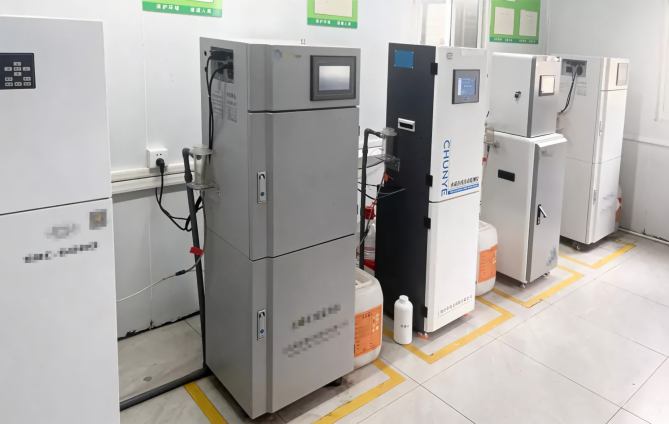
Recently, the technical team from Shanghai Chunye Instrument Technology Co., Ltd. (CHUNYE) visited an environmental technology enterprise in Suzhou to complete the on-site positioning, pipeline connection, reagent loading, calibration and verification, and network communication commissioning of the T9001 Online Ammonia Nitrogen Water Quality Analyzer. Integrated into the facility’s complete pollution source online monitoring system, the analyzer is now officially in operation, providing continuous, stable, and traceable ammonia nitrogen data for the company’s wastewater discharge management.
01 Project Background
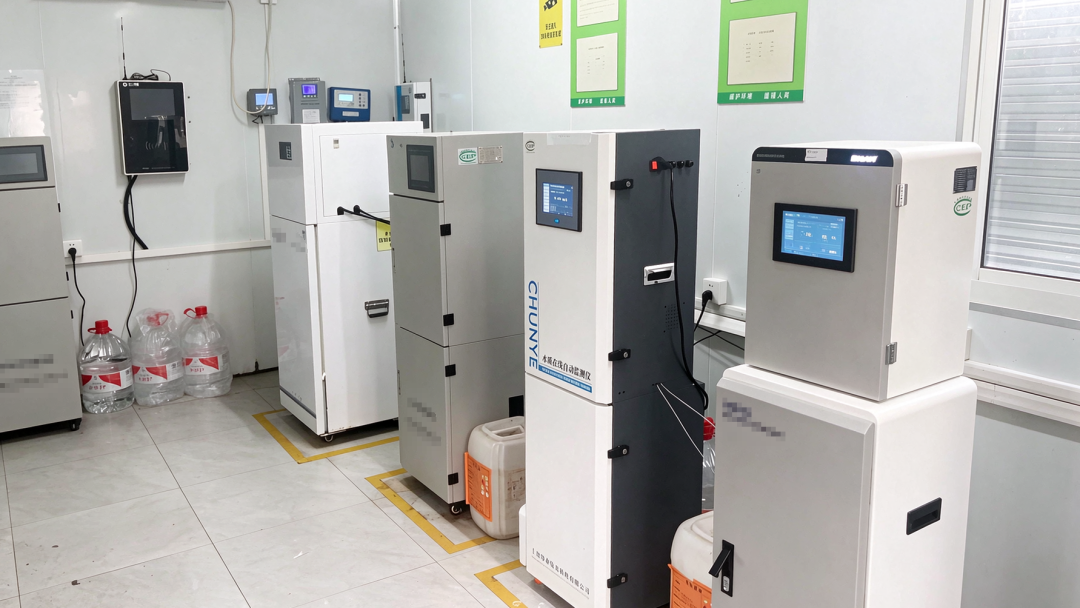
The company’s wastewater treatment plant is responsible for the centralized treatment of production wastewater and ensuring it meets discharge standards; ammonia nitrogen is a key indicator for pollution discharge permits and environmental regulatory oversight. Traditional manual sampling and testing methods suffer from issues such as data lag, an inability to capture real-time fluctuations in water quality, and difficulties in providing timely warnings when levels exceed standards. To meet the requirements for round-the-clock online monitoring and data upload to the regulatory platform, the company implemented the Chunyue T9001 Online Ammonia Nitrogen Analyzer. This device was integrated into a network with the station’s other monitoring equipment—including COD, total phosphorus, and total nitrogen analyzers—as well as data acquisition units, thereby establishing an integrated online water quality monitoring system.
02 About the T9001 Online Ammonia Nitrogen Analyzer
The T9001 utilizes salicylate spectrophotometry. After the water sample is mixed with a masking agent, free ammonia or ammonium ions react with salicylate ions and hypochlorite ions in an alkaline environment in the presence of a sensitizer to form a colored complex. The analyzer measures the resulting color change and converts it into an ammonia nitrogen concentration readout. This mature analytical method offers strong anti-interference capability, making it well-suited for online monitoring of both industrial wastewater and municipal sewage.
03 Core Technical Specifications
| Parameter | Technical Specification |
|---|---|
| Measurement Method | Salicylate spectrophotometry |
| Measurement Range | 0–3 / 10 / 20 / 50 / 100 / 150 / 200 / 300 mg/L (segmented measurement; customizable range) |
| Indication Error | 20% standard solution: ≤ ±10%; 50% standard solution: ≤ ±8%; 80% standard solution: ≤ ±5% |
| Limit of Quantitation (LOQ) | ≤ 0.15 mg/L |
| Repeatability | ≤ 2% |
| 24-Hour Drift | Low concentration: ≤ 0.02 mg/L; High concentration: ≤ 1% |
| Measurement Time | Less than 30 min (configurable digestion time) |
| Measurement Mode | Adjustable time interval, on-the-hour, or triggered measurement (configurable) |
| Calibration Mode | Automatic calibration (adjustable from 1 to 99 days); manual calibration supported |
| Data Storage | 5 years of historical data storage |
| Output Interfaces | 1× RS232, 1× RS485, 2× 4–20 mA analog outputs; digital switch input |
| Operating Environment | Indoor, 5–28 °C, relative humidity ≤ 90% (non-condensing) |
| Power Supply / Consumption | AC 220 ± 10% V, 50 ± 0.5 Hz; ≤ 150 W (excluding sampling pump) |
| Dimensions | Floor-standing cabinet: 1460 × 430 × 382 mm; Wall-mounted: 740 × 430 × 332 mm |
04 Equipment Highlights
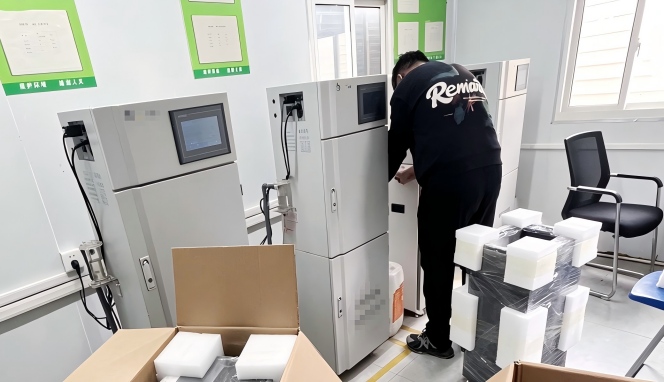
05 On-Site Installation and Commissioning
Inside the monitoring station, operational procedures, staff responsibilities, and compliance signage have been mounted on the wall, and all monitoring records are centrally archived to ensure standardized operation of the online monitoring facility.
✔ Project Value
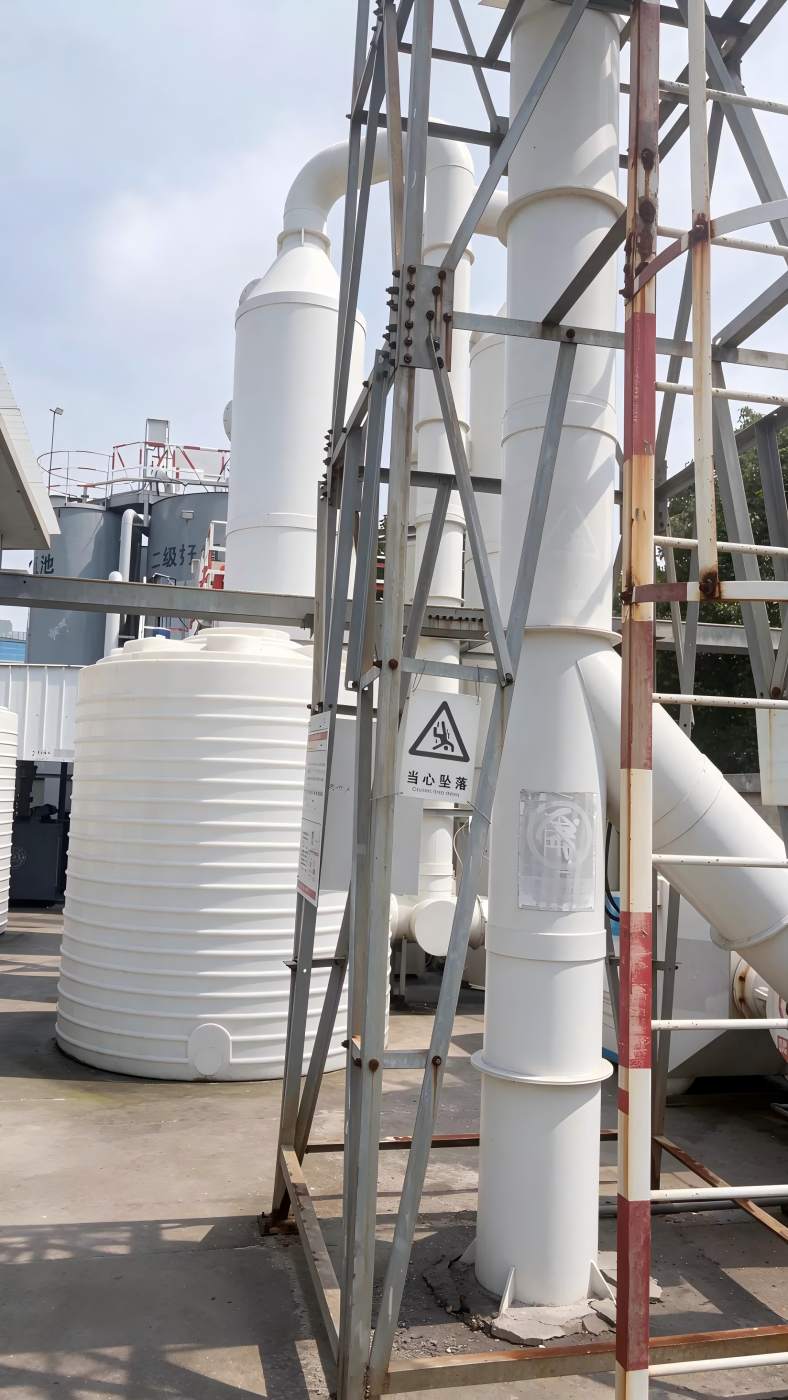
Once the equipment is operational, it can continuously monitor ammonia-nitrogen concentrations in wastewater 24 hours a day, 7 days a week, and issue immediate alerts when levels deviate from normal ranges, helping operations and maintenance personnel promptly adjust the biological treatment process and reduce the risk of discharges exceeding regulatory limits. Five years of data are stored with a complete audit trail, facilitating environmental compliance audits and record-keeping, while also reducing the workload associated with manual sampling and laboratory testing, thereby helping enterprises achieve precise, digital control over wastewater discharge.
Looking ahead, Shanghai Chunye Instrument Technology will continue to deepen its expertise in online water quality monitoring, providing one-stop online monitoring solutions for COD, ammonia nitrogen, total phosphorus, and total nitrogen to municipal wastewater treatment plants, industrial parks, environmental enterprises, and river monitoring sections—supporting water environment governance with stable and reliable domestically manufactured instrumentation.
Post time: Nov-27-2026