

Water quality monitoring is one of the core components of environmental monitoring efforts. It provides accurate, timely, and comprehensive insights into current water quality conditions and development trends, offering a scientific basis for water environment management, pollution source control, and environmental planning. This monitoring plays a pivotal role in overall water conservation, pollution prevention, and maintaining water ecosystem health.
Shanghai Chunye’s service philosophy is to “strive to transform its ecological and environmental advantages into ecological economic advantages.” Its business scope primarily encompasses the R&D, production, sales, and services of a comprehensive range of products, including industrial process control instruments, online automatic water quality monitors, VOCs (volatile organic compounds) online monitoring systems and TVOC online monitoring alarm systems, IoT-based data acquisition, transmission, and control terminals, CEMS flue gas continuous monitoring systems, online dust and noise monitors, and air quality monitoring equipment.

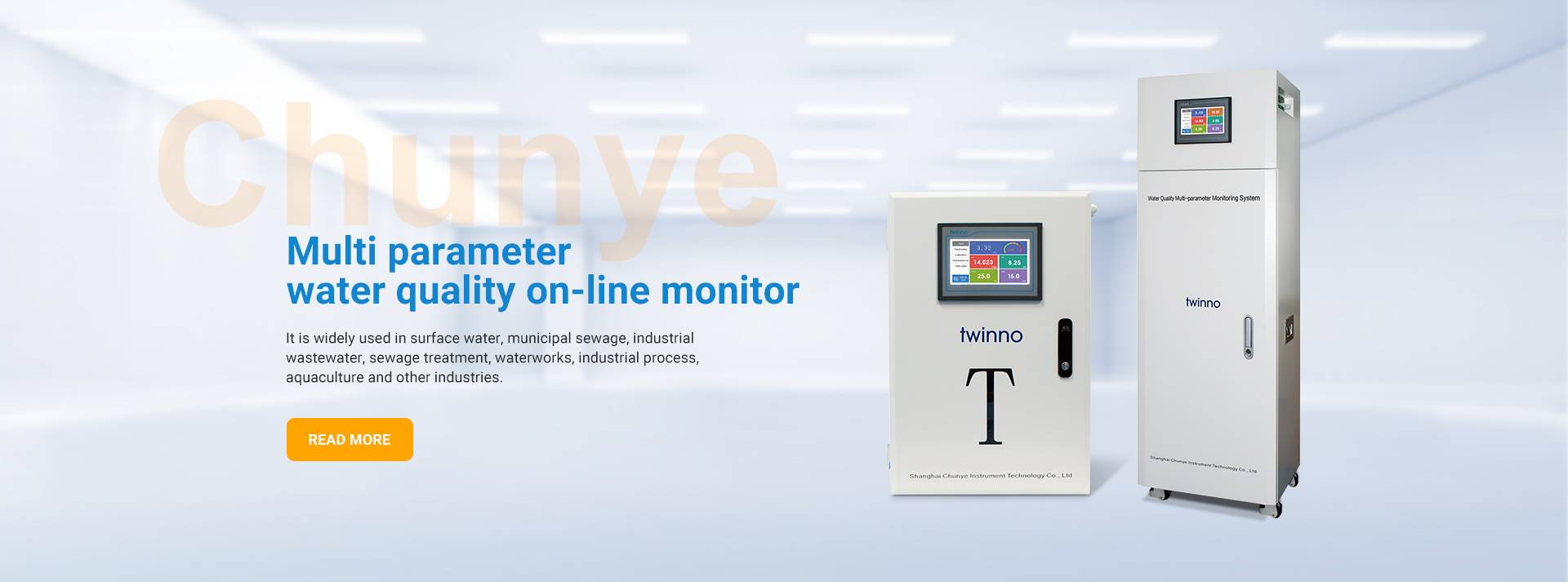
Recently, Shanghai Chunye Technology’s complete online water quality monitoring system has undergone full equipment installation, on-site commissioning, and comprehensive final acceptance at a sewage treatment plant in Shaoyang City, Hunan Province. The system complies with the national environmental standard HJ212 and enables 24-hour real-time monitoring of influent, biochemical tank, and effluent water quality. The project includes a suite of products from Chunye—including analyzers, immersion sensor probes, control instruments, and ultrasonic sludge level sensors—providing comprehensive monitoring of water quality and sludge conditions. The equipment is stable and easy to maintain, having successfully passed client acceptance inspection.
I. Project Background

The Shaoyang Sewage Treatment Plant serving this project primarily handles domestic wastewater and small volumes of industrial effluent in the area. Its aging monitoring system, having operated for many years, has revealed significant challenges in operation, maintenance, and compliance. The facility urgently requires a comprehensive smart upgrade.
• The existing COD and ammonia nitrogen analyzers are severely aged, exhibiting significant measurement data drift and failing to securely integrate with the environmental monitoring platform, posing risks of exceeding reporting thresholds and incurring environmental penalties.
• Dissolved oxygen levels, sludge concentration, and sediment depth in the biochemical tank are all monitored through manual periodic sampling, resulting in delayed data updates; aeration and sludge discharge must be adjusted empirically, while chemical consumption and power usage remain persistently high.
• No online monitoring equipment is available for pH, ORP, effluent residual nitrogen, or nitrate nitrogen; real-time data support is lacking for disinfection and biochemical regulation processes.
• Most suppliers on the market can only provide either probes or analyzers individually, unable to offer a complete monitoring hardware solution as one-stop service; this results in protocol incompatibility between devices and cumbersome post-installation debugging and after-sales support.
II. Project Challenges
Given the operational conditions at Shaoyang Wastewater Treatment Plant and stringent environmental compliance requirements, this project faces four major core challenges:
• Numerous monitoring points and diverse product categories: There are eight monitoring sites across the plant—including influent, biochemical tank, secondary sedimentation tank, and disinfection effluent—requiring simultaneous monitoring of over ten parameters such as COD, ammonia nitrogen, total phosphorus, total nitrogen, DO, sludge concentration, sludge level, pH/orP, nitrate nitrogen, and residual chlorine. Most commercial suppliers offer only single-product solutions, resulting in poor system compatibility.
• Harsh wastewater operating conditions: The biological reactor and sedimentation tank contain severe accumulation of sediment and biological sludge; conventional probes are highly susceptible to scaling and blockage, leading to immediate data distortion within a short period, while frequent manual cleaning significantly increases the operational and maintenance workload;
• Challenges in station construction and tank installation: Existing monitoring stations have limited space; all reserved mounting holes in tanks feature standard G3/4 threads; at certain locations, water depth is insufficient, imposing strict constraints on sensor installation height and distance from tank walls.
• High requirements for environmental data integration: All monitoring data must be simultaneously uploaded to both the plant’s central control system and the municipal environmental supervision platform. The protocols of the old and new systems are incompatible, resulting in substantial joint debugging efforts, and continuous stability compliance for 72 hours is mandatory before acceptance.

III. Solution
To address the project’s key challenges and on-site construction difficulties, Chunye Technology developed a customized integrated water quality monitoring solution featuring a comprehensive suite of proprietary equipment. The system is deployed across four categories: large-scale analyzers in sub-station buildings, digital sensors for water tanks, industrial control instruments, and ultrasonic detection devices.
① Fully automated online analyzer for station equipment

• CODcr Online Automatic Water Quality Monitor: Based on potassium dichromate spectrophotometry, suitable for high-concentration wastewater samples, with 5-year data storage capability and compatibility for dual protocol (HJ212 and Modbus) data upload to environmental monitoring platforms
• Online automatic ammonia nitrogen water quality monitor: employing salicylic acid spectrophotometry with a detection range of 0–300 mg/L, featuring automatic calibration and automated reagent dosing, designed for municipal wastewater applications
• Online monitoring instruments for total phosphorus and total nitrogen: Equipped with fully automated digestion analysis systems for nitrogen and phosphorus determination, fully meeting the monitoring requirements of wastewater treatment plant discharge standards.
② Industrial Online Controller

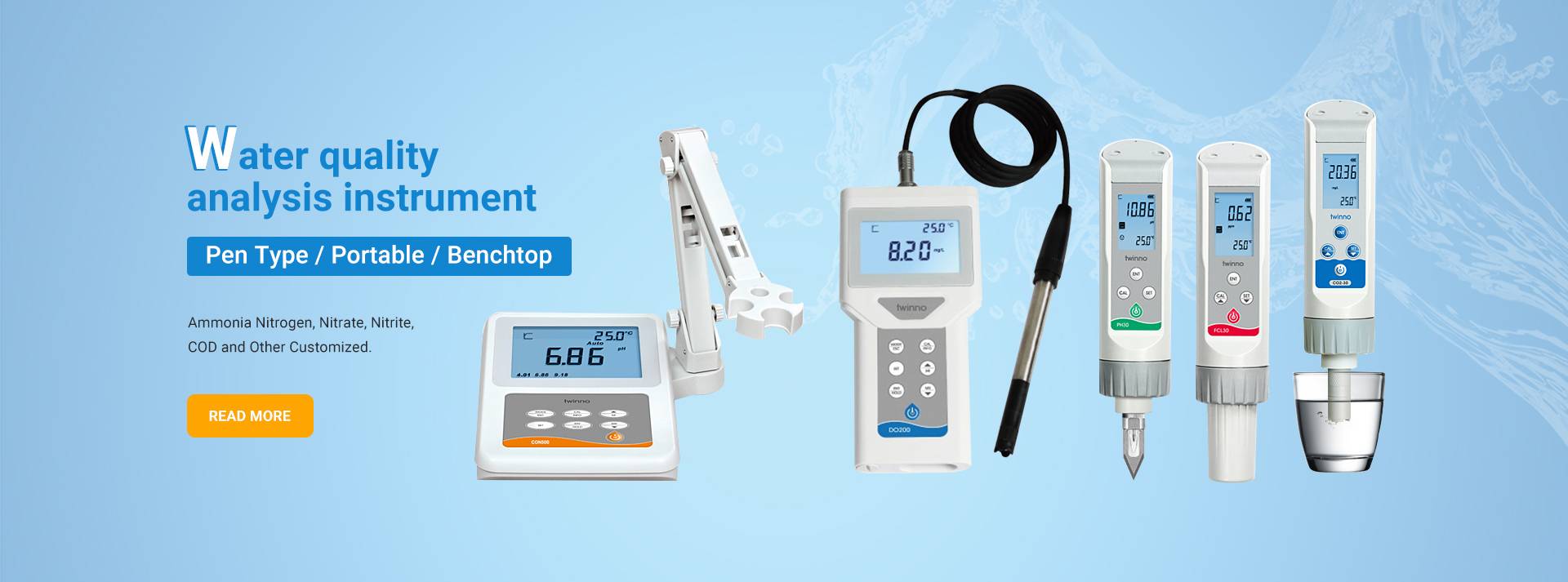
• Online ORP meter: Small panel controller with 2 relays and 4–20 mA output, designed for real-time monitoring of water redox potential
• Online pH meter: features a large display screen, three sets of relays, and historical data storage capability; equipped with dual-threaded plastic-shelled electrodes with a voltage resistance of 0.6 MPa and temperature tolerance ranging from 0 to 80°C, suitable for monitoring river water, wastewater, and purified water, providing stable measurement of pH and ORP parameters.
• Fluorescence-based online dissolved oxygen meter: Equipped with an IP68-rated corrosion-resistant digital dissolved oxygen sensor with a measurement range of 0–20 mg/L and built-in NTC temperature compensation, designed to monitor aeration in biochemical tanks without frequent membrane head replacement.
• Online residual chlorine analyzer: Specifically designed for disinfection processes, supporting calibration, data storage, and high/low alarm functions; equipped with a constant-pressure electrode with a measurement range of 0–20 mg/L, suitable for monitoring tap water, wastewater effluent, and swimming pool circulation systems.
• UV Nitrogen Monitor: Features dual-wavelength ultraviolet detection without reagents, a probe equipped with a self-cleaning brush, an IP68-rated stainless steel housing, and a measurement range of 0.1–100 mg/L for long-term monitoring of nitrate nitrogen in various water bodies.
• Sludge concentration monitor: 135° infrared scattering detection, large-screen controller with multi-unit switching capability and three relay alarm systems; IP68-rated sensor equipped with automatic brush cleaning function, measurement range 0.01–50,000 mg/L, suitable for measuring suspended solids concentrations in wastewater, pulp, and slurry.
• Ultrasonic sludge level gauge: measurement range of 0.2–12 m, dual output (4–20 mA/RS485), IP68-rated stainless steel probe with a blind zone <20 cm, accurately identifies the sludge-water layer in sedimentation tanks and guides sludge discharge and recirculation.
③ Supporting level monitoring equipment

• Integrated ultrasonic level transmitter: Non-contact measurement, available in multiple measurement ranges, featuring dual signal output and built-in lightning protection; high precision with easy maintenance, suitable for monitoring liquid levels in tanks and reservoirs.
④ Comprehensive, one-stop floor installation services
• Standardized construction
The sensor is positioned at least 5 cm above the pool bottom; the ultrasonic probe is kept away from the pool walls to avoid echo interference; pipelines within the station are arranged in layers, and waste liquid is collected separately.
• Unified Communication Debugging
All devices come standard with a Modbus RTU, enabling seamless data integration between the plant’s central control system and environmental monitoring platforms.
• Optimized design for operating conditions
The probe’s automatic cleaning mechanism reduces the frequency of manual cleaning, while the analyzer’s low-reagent consumption formula significantly lowers long-term operation and maintenance costs.
IV. Project Acceptance

Upon completion of full equipment installation, individual unit calibration, and comprehensive system integration, our team collaborated with the wastewater treatment plant’s operations and maintenance staff as well as a third-party acceptance team to conduct a thorough final inspection, achieving compliance with all four key requirements on the first attempt.
• Hardware Installation Verification
Check the installation procedures for each unit of the T9000/T9001 analyzers, W-series controllers, CS-series sensors, and ultrasonic mud/liquid level gauges; ensure that cable waterproofing, bracket fixation, and pipeline leak-proofing all comply with specifications.
• Precision Stability Test
Using National Standard reference solutions, a full-parameter test was conducted over 72 consecutive hours; the instrument measurement errors for COD, ammonia nitrogen, dissolved oxygen, sludge content, nitrate nitrogen, residual chlorine, as well as the 24-hour drift values, all complied with the National Standards; the self-cleaning scraping mechanism operates stably, with no data drift observed.
• Data Transmission Verification
The system simulates various scenarios including measurement, calibration, and fault detection, with real-time data, device alarms, and historical records being securely synchronized to both the central control platform and environmental monitoring platform. Communication via Modbus and HJ212 protocols remains uninterrupted without packet loss.
• Comprehensive Delivery Training
The acceptance team verified that the equipment list, original manufacturer’s manuals, and all accompanying spare parts were complete, and successfully signed the acceptance form. Upon completion of acceptance, Chunye’s technical personnel conducted on-site specialized training for the operation and maintenance team covering operation procedures, calibration, and fault diagnosis, while providing long-term on-site calibration services, spare part replacement, and after-sales support.
Post time: Jul-28-2026