


Product Description:
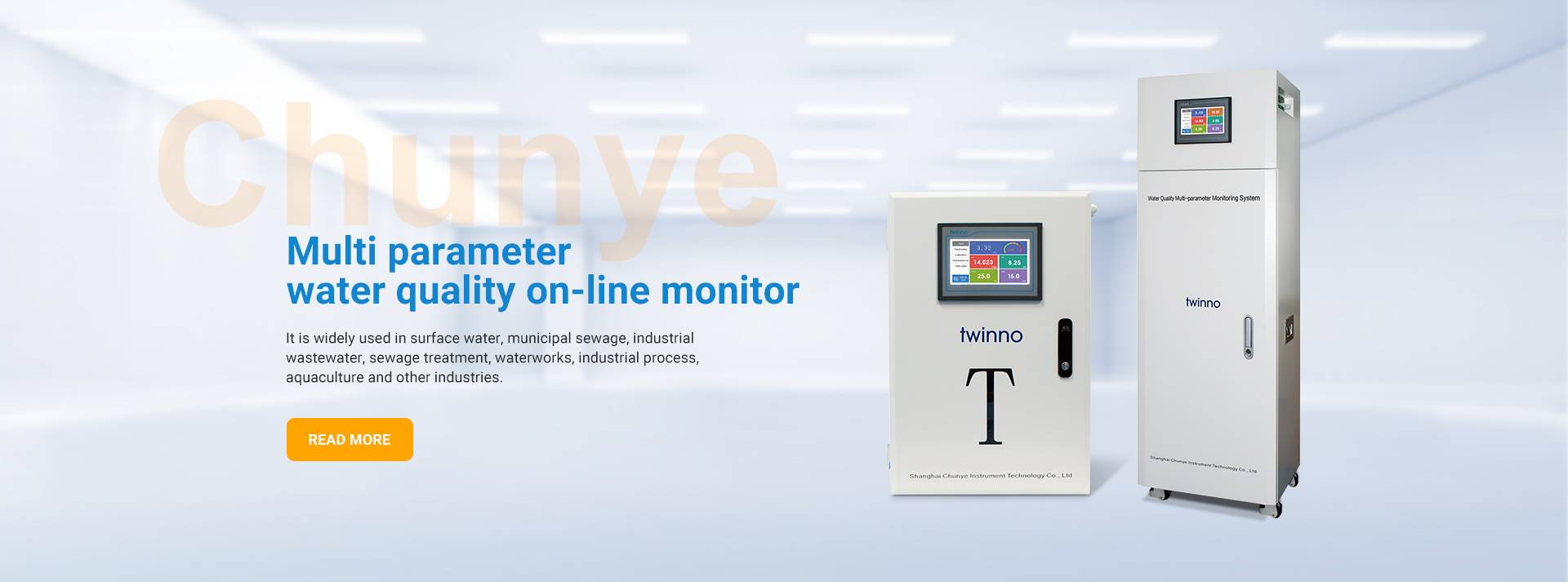
Copper is a widely used and important metal applied in numerous fields, such as alloys, dyes,pipelines, and wiring. Copper salts can inhibit the growth of plankton or algae in water.In drinking water, copper ion concentrations exceeding 1 mg/L produce a bitter taste.This analyzer can operate continuously and unattended for extended periods based on on-site settings. It is widely applicable for monitoring wastewater from industrial pollution sources, industrial process effluents, industrial sewage treatment plants, and municipal sewage treatment plants.
Product Principle:
High-temperature digestion of water samples converts complexed copper, organic copper, and other forms into divalent copper ions. A reducing agent then converts the divalent copper to cuprous copper. The cuprous ions react with a color reagent to form a yellow-brown complex. The concentration of this complex correlates directly with the total copper concentration in the water sample. The device performs spectrophotometric analysis: it compares the initial color of the sample with the color after adding the color reagent, analyzing the concentration difference to detect and quantify copper ions.
Technical Specifications:
SN Specification Name Technical Specifications
1 Test Method Phloroglucinol Spectrophotometry
2 Measurement Range 0–30 mg/L (segmented measurement, expandable)
3 Detection limit ≤0.01
4 Resolution 0.001
5 Accuracy ±10%
6 Repeatability ≤5%
7 Zero drift ±5%
8 Range drift ±5%
9 Measurement Cycle Minimum test cycle: 30 minutes, configurable
10 Sampling Cycle Time interval (adjustable), hourly, or trigger measurement mode, configurable
11 Calibration Cycle Auto-calibration (adjustable from 1 to 99 days), manual calibration can be set based on actual water samples.
12 Maintenance Cycle Maintenance intervals exceed one month, with each session lasting approximately 5 minutes.
13 Human-Machine Operation Touchscreen Display and Command Input
14 Self-Diagnostic Protection The instrument performs self-diagnostics during operation and retains data after abnormalities or power loss. Following abnormal resets or power restoration, it automatically purges residual reagents and resumes normal operation.
15 Data Storage 5-Year Data Storage
16 One-Button Maintenance Automatically drains old reagents and cleans tubing; replaces new reagents, performs automatic calibration and verification; optional automatic cleaning of digestion cells and metering tubes with cleaning solution.
17 Quick Debugging Achieve unattended, uninterrupted operation with automatic generation of debugging reports, greatly enhancing user convenience and reducing labor costs.
18 Input Interface switching value
19 Output Interface 1 channel RS232 output, 1 channel RS485 output, 1 channel 4–20 mA output
20 Operating Environment Indoor operation, recommended temperature range: 5–28℃, humidity ≤90% (non-condensing)
21 Power Supply AC220±10%V
22 Frequency 50±0.5Hz
23 Power ≤150 W (excluding sampling pump)
24 Dimensions 1,470 mm (H) × 500 mm (W) × 400 mm (D)


