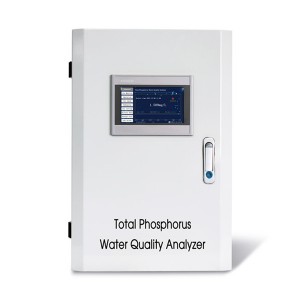


Product Overview:
Phenols can be classified into volatile and non-volatile phenols based on whether they can be distilled with steam.
Volatile phenols generally refer to monophenols with boiling points below 230°C. Phenols primarily originate
from wastewater produced in oil refining, gas washing, coking, papermaking, synthetic ammonia production,
wood preservation, and chemical industries. Phenols are highly toxic substances, acting as protoplasmic poisons.
Low concentrations can denature proteins, while high concentrations cause protein precipitation, directly damaging v
arious cells and strongly corroding skin and mucous membranes. Long-term consumption of phenol-contaminated
water may lead to dizziness, skin rashes, itching, anemia, nausea, vomiting, and various neurological symptoms.
Phenolic compounds have been identified as tumor promoters in humans and mammals.
Product Principle:
In an alkaline medium, phenolic compounds react with 4-aminoantipyrine. In the presence of potassium ferricyanide,
an orange-red antipyrine dye is formed. The instrument performs quantitative analysis using spectrophotometry.
Technical Parameters:
| No. |
Specification Name |
Technical Specification Parameter |
| 1 |
Test Method |
4-Aminoantipyrine Spectrophotometry |
| 2 |
Measuring Range |
0~10mg/L (Segment measurement, expandable) |
| 3 |
Lower Detection Limit |
≤0.01 |
| 4 |
Resolution |
0.001 |
| 5 |
Accuracy |
±10% |
| 6 |
Repeatability |
≤5% |
| 7 |
Zero Drift |
±5% |
| 8 |
Span Drift |
±5% |
| 9 |
Measurement Cycle |
Less than 25min, digestion time adjustable |
| 10 |
Sampling Cycle |
Time interval (adjustable), on-the-hour,
or triggered measurement mode, configurable |
| 11 |
Calibration Cycle |
Automatic calibration (1~99 days adjustable);
Manual calibration configurable based on actual water sample |
| 12 |
Maintenance Cycle |
Maintenance interval >1 month; each session approx. 5min |
| 13 |
Human-Machine Operation |
Touchscreen display and command input |
| 14 |
Self-check & Protection |
Self-diagnosis of instrument status; data retention after abnormality
or power failure; automatic clearing of residual reactants and resumption of operation after abnormal reset or power restoration |
| 15 |
Data Storage |
5-year data storage capacity |
| 16 |
One-Key Maintenance |
Automatic draining of old reagents and cleaning of pipelines;
automatic replacement of new reagents, automatic calibration, and automatic verification; optional use of cleaning solution for automatic cleaning of digestion chamber and metering tubes |
| 17 |
Rapid Debugging |
Enables unattended, continuous operation; automatically generates
debug reports,greatly facilitating users and reducing labor costs |
| 18 |
Input Interface |
Digital input (Switch) |
| 19 |
Output Interface |
1x RS232 output, 1x RS485 output, 1x 4~20mA analog output |
| 20 |
Operating Environment |
Indoor use; recommended temperature 5~28°C;
humidity ≤90% (non-condensing) |
| 21 |
Power Supply |
AC220±10% V |
| 22 |
Frequency |
50±0.5 Hz |
| 23 |
Power Consumption |
≤150W (excluding sampling pump) |
| 24 |
Dimensions |
520mm (H) x 370mm (W) x 265mm (D) |