

Products
-

CS4763 Dissolved Oxygen Electrode
dissolved oxygen (DO) electrode, also known as a Clark-type electrode, is a vital analytical tool for measuring the concentration of oxygen molecules in aqueous solutions. Its operation relies on electrochemical principles. The core component is a gas-permeable membrane, typically made of Teflon or polyethylene, which selectively allows oxygen to diffuse through. Behind this membrane lies an electrochemical cell consisting of a cathode (usually gold or platinum) and an anode (often silver), immersed in an electrolyte solution.
When a polarizing voltage is applied between the electrodes, oxygen molecules that diffuse through the membrane are reduced at the cathode. This reduction reaction generates an electric current that is proportional to the partial pressure of oxygen outside the membrane, following Faraday's law. The current signal is then converted into a DO concentration reading, commonly expressed in milligrams per liter (mg/L) or percent saturation. -

CS4773 Dissolved Oxygen Electrode
DO electrodes are indispensable across numerous fields. In environmental monitoring, they assess the health of rivers, lakes, and oceans, as oxygen levels are a key indicator of water quality and ecosystem viability. In wastewater treatment plants, they are crucial for optimizing the biological treatment process by ensuring sufficient oxygen for microbial activity. Furthermore, they play essential roles in aquaculture to maintain healthy conditions for fish, in the food and beverage industry for process and quality control, and in pharmaceutical and biochemical research for monitoring cell cultures and fermentation processes.
Modern DO electrodes are often coupled with advanced meters for temperature and salinity compensation, ensuring high accuracy and reliability. Despite the emergence of optical fluorescence-based sensors, the electrochemical DO electrode remains widely valued for its robustness, proven performance, and cost-effectiveness in diverse laboratory and industrial settings.
-

T9259C Residual Chlorine Analyzer
Product Features:
Wide power input range, 7-inch touchscreen design
DPD colorimetric method for more precise and stable measurement
Selectable measurement cycle
Automatic measurement and automatic cleaning
External signal input can control measurement start or stop
Selectable automatic or manual mode
4-20mA and RS485 output, relay control
Data storage function, supports USB export -

T9039K Automatic Water Quality Sampler
Controlled by a microcomputer and equipped with a high-precision peristaltic pump, it supports various sampling, analytical supply, and sample preservation modes, including timed, fixed-flow, and proportional sampling. It also enables remote control and data communication. -

T9262C Total Chlorine Analyzer
Product Features:
Wide power input range, 7-inch touch screen design
DPD colorimetric method, providing more accurate and stable measurement
Measurement cycle can be selected
Automatic measurement and automatic cleaning
-

T9260C Total Chlorine Analyzer
Product Features:
Wide power input range, 7-inch touch screen design
DPD colorimetric method, providing more accurate and stable measurement
Measurement cycle can be selected
Automatic measurement and automatic cleaning
-

T9258C Free Chlorine Analyzer
T9258C Free Chlorine Analyzer uses DPD colorimetric method to detect the concentration of residual chlorine. It is an instrument with accurate measurement, high cost performance and low maintenance. -

CS3501C Conductivity Sensor Analyser
The electrode typically features two graphite elements (cells) with a defined surface area and spacing, housed within a durable, chemically resistant body. When immersed, an alternating current is applied to prevent polarization. The ions in the solution facilitate current flow between the electrodes, generating a signal proportional to the solution's conductivity. A built-in temperature sensor (e.g., Pt1000) is essential for automatic compensation, as conductivity is highly temperature-dependent. Modern versions often incorporate multiple cells (like four-electrode designs) to extend range and minimize fouling errors.
The primary advantage of graphite over platinum is its superior cost-effectiveness and robustness in harsh or fouling-prone environments, such as wastewater, cooling towers, or chemical processes where abrasion or coating is a concern. However, graphite may have limitations in very high-precision or ultra-pure water applications compared to advanced platinum cells. -

CS3701C EC & TDS Conductivity Sensor Probe with RS485 Output
graphite conductivity electrode is a core component in sensors designed for measuring the electrical conductivity of various liquids, particularly water-based solutions. As an alternative to traditional platinum electrodes, graphite models offer distinct advantages in specific applications due to their material properties. Conductivity, a key indicator of total dissolved ionic solids (TDS) and water purity, is critical for process control in industries ranging from pharmaceuticals and power generation to wastewater treatment and agriculture.
Conductivity sensor technology is an important field of engineering and technology research, used for the liquid conductivity measurement, is widely used in human production and life, as electric power, chemical industry, environmental protection, food, the semiconductor industry research and development, Marine industrial production and essential in the development of technology, a kind of testing and monitoring devices.The conductivity sensor is mainly used to measure and detect industrial production water, human living water, seawater characteristics and battery electrolyte properties. -

CS3540 Industrial Conductivity Sensor
Key advantages include excellent resistance to corrosion and coating, making it suitable for wastewater, aggressive chemicals, and high-solids slurries where platinum electrodes would rapidly degrade. Its rugged construction often allows for high-pressure and high-temperature operation. However, its primary limitation is a narrower measurement range compared to premium platinum cells, as graphite can polarize at very high conductivities.The graphite conductivity electrode is a robust and widely used sensor designed for measuring the electrical conductivity of aqueous solutions in demanding industrial, environmental, and process control applications. It offers a cost-effective and durable alternative to traditional platinum electrodes, particularly in media where fouling, abrasion, or chemical attack are concerns. When paired with a high-quality transmitter, the graphite conductivity electrode provides a reliable balance of performance and longevity for challenging on-line monitoring tasks, forming a critical component in modern water quality management. -

CS3601C Conductivity Sensor RS485 EC Probe
The graphite conductivity electrode is a robust and widely used sensor designed for measuring the electrical conductivity of aqueous solutions in demanding industrial, environmental, and process control applications. It offers a cost-effective and durable alternative to traditional platinum electrodes, particularly in media where fouling, abrasion, or chemical attack are concerns.
The electrode typically consists of two precisely spaced graphite elements (cells) encased within a chemically resistant body, such as PPS or epoxy. Graphite's inherent conductivity and porous structure provide a large effective surface area, ensuring stable signal generation. When an alternating current is applied, the ions in the solution complete the circuit between the electrodes; the measured conductance is directly proportional to the ion concentration. A built-in temperature sensor (usually a Pt1000 RTD) is essential for automatic temperature compensation, correcting readings to the standard reference of 25°C.
These electrodes are integral to systems monitoring water purity (e.g., RO permeate, ultrapure water), controlling chemical dosing in wastewater treatment, and managing concentration in industrial processes like cooling towers or food & beverage production. When paired with a high-quality transmitter, the graphite conductivity electrode provides a reliable balance of performance and longevity for challenging on-line monitoring tasks, forming a critical component in modern water quality management. -

CS3740 Industrial Conductivity Sensor Multiparameter Water Quality Sensor
Measuring specific conductivity of aqueous solutions is becoming increasingly important for determining impurities in water.The measurement accuracy is greatly affected by temperature variation, polarization of the contact electrode surface, cable capacitance, etc.Twinno has designed a variety of sophisticated sensors and meters that can handle these measurements even in extreme conditions.
Twinno's 4-electrode sensor has been proven to operate over a wide range of conductivity values. It is made of PEEK and is suitable for simple PG13/5 process connections.The electrical interface is VARIOPIN, which is ideal for this process.
Feature highlights:This RS485 2-in-1 industrial submersible sensor measures pH, EC, and temperature with high accuracy (±0.03pH; ±1.5% FS) and resolution (0.01pH; 0.1µS/cm). It operates in temperatures of 0-60°C, humidity up to 100% RH, and features an IP68 waterproof rating, making it ideal for water quality testing in harsh environments. -

CS6602CD Digital COD Sensor
Introduction:
COD sensor is a UV absorption COD sensor, combined with a lot of application experience, based on the original basis of a number of upgrades, not only the size is smaller, but also the original separate cleaning brush to do one, so that the installation is more convenient, with higher reliability.
It does not need reagent, no pollution, more economic and environmental protection.On-line uninterrupted water quality monitoring.Automatic compensation for turbidity interference, with automatic cleaning device, even if long-term monitoring still has excellent stability.
Testing principle:
Many organic compounds dissolved in water are absorbent to ultraviolet light. Therefore, the total amount of organic pollutants in the water can be measured by measuring the extent to which these organics absorb ultraviolet light at 254nm. -

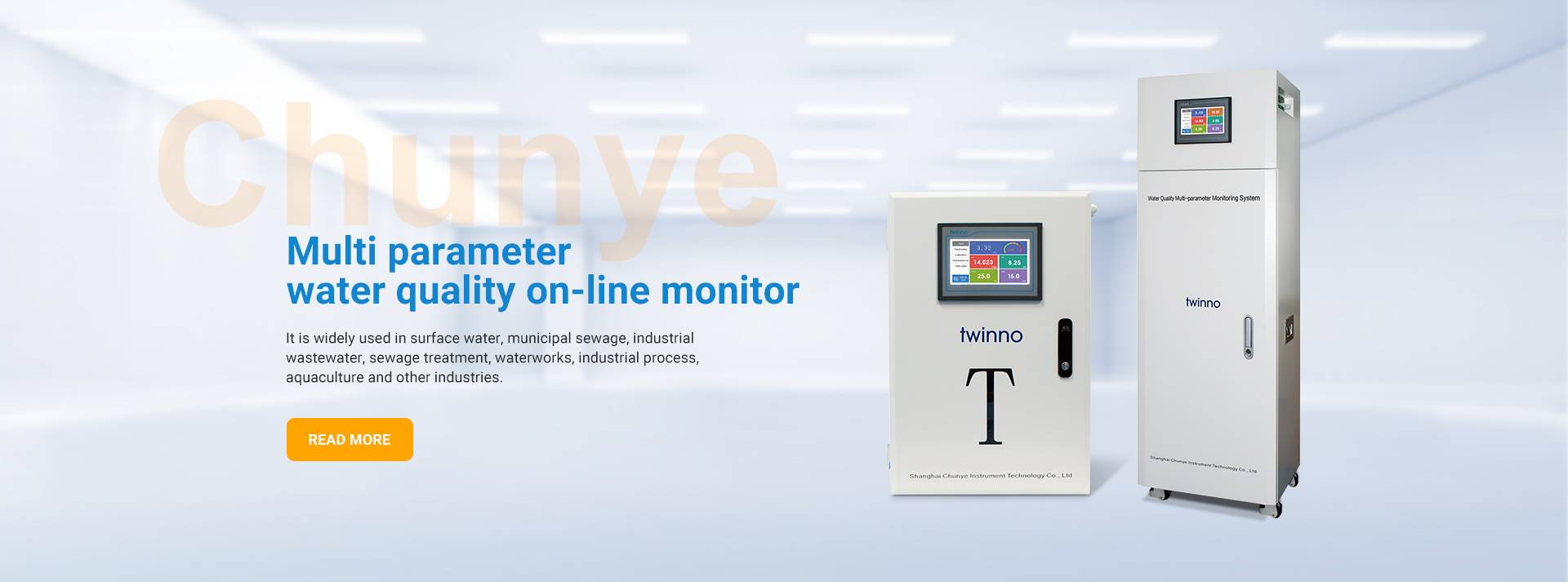
T9040 Water Quality Multi-parameter online monitoring system
Water Quality Multi-parameter Online Monitoring System is an integrated, automated platform designed for the continuous, real-time measurement of multiple critical water quality parameters at a single point or across a network. It represents a fundamental shift from manual, laboratory-based sampling to proactive, data-driven water management across drinking water safety, wastewater treatment, environmental protection, and industrial process control.
The core of the system is a robust sensor array or a centralized analyzer that hosts various detection modules. Key measured parameters typically include the fundamental five (pH, Dissolved Oxygen (DO), Conductivity, Turbidity, and Temperature), often extended with Nutrient Sensors (Ammonium, Nitrate, Phosphate), Organic Matter Indicators (UV254, COD, TOC), and Toxic Ion Sensors (e.g., Cyanide, Fluoride). These sensors are housed in durable, submersible probes or flow-through cells, connected to a central data logger/transmitter.
The system's intelligence lies in its automation and connectivity. It performs automatic calibration, cleaning, and data validation, ensuring long-term reliability with minimal maintenance. Data is transmitted in real-time via industrial protocols (4-20mA, Modbus, Ethernet) to central Supervisory Control and Data Acquisition (SCADA) systems or cloud platforms. This enables instant alarm triggering for parameter exceedances, trend analysis for predictive maintenance, and seamless integration with process control loops for automated chemical dosing or aeration control.
By providing a comprehensive, real-time water quality profile, these systems are indispensable for ensuring regulatory compliance, optimizing treatment processes, protecting aquatic ecosystems, and safeguarding public health. They transform raw data into actionable intelligence, forming the backbone of modern smart water networks. -

Model W8500G Online Turbidity Meter
Typical Applications
Turbidity monitoring of effluent water in waterworks.Water quality monitoring of municipal pipe networks.Industrial process water quality monitoring, including circulating cooling water, effluent from activated carbon filters, effluent from membrane filters, etc.
Instrument Features:
●Large-screen LCD display
●Intelligent menu operation
●History date logging
●Manual or automatic temperature compensation
●Three groups of relay control switches
●High-limit, low-limit and hysteresis contro
●Multiple output modes: 4-20mA & RS485
●Simultaneous display of turbidity value, temperature and current value on the same interface
●Password protection function to prevent misoperation by unauthorized personnel