


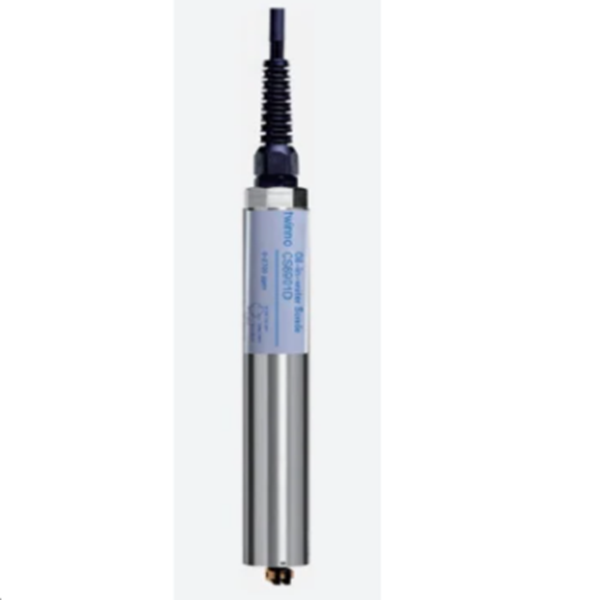

CS6900CD Digital Oil-in-Water Sensor
Description
Commonly used oil-in-water detection methods include the suspension method (D/λ<=l), infrared
spectrophotometry (not suitable for low range), ultraviolet spectrophotometry (not suitable for high range), etc. The online oil-in-water sensor adopts the principle of the fluorescence method. Compared with several commonly used methods, the fluorescence method is more efficient, quicker, and more reproducible, and can be monitored online in real time. The sensor has better repeatability and stability. With an automatic cleaning brush, it can
eliminate air bubbles and reduce the impact of contamination on the measurement, making the maintenance cycle longer, and maintaining excellent stability during long-term online use. It can act as an early warning to the pollution of oil in water.
The ultraviolet fluorescence method is used to monitor the oil content in the water body, and the oil
concentration in the water body is quantitatively analyzed based on the fluorescence intensity emitted by the
petroleum and its aromatic hydrocarbon compounds and compounds containing conjugated double bonds after absorbing ultraviolet light. Aromatic hydrocarbons in petroleum can produce fluorescence under the excitation of ultraviolet light, and the value of oil in water can be calculated according to the intensity of fluorescence.
Technicals
| Model No. | CS6900CD |
| Power/Outlet | 9~36VDC/RS485 MODBUS RTU |
| Measure Principle | Fluorescence |
| Dimensions | φ45*175.8mm |
| Housing material | 316L stainless steel |
| Waterproof rating | IP68 |
| Measurement range | 0-200ppm |
| Resolution | 0.1ppm |
| Accuracy | ±3% F.S |
| Pressure resistance | ≤0.3Mpa |
| Measuring Temperature | 0-50℃ |
| Calibration | Sample calibration, standard liquid calibration |
| Cable length | Standard 10 m cable, can be extended to 100 m |
| Installation thread | G3/4 |
| Application | General application: river, lake, environmental protection, etc. |