

pH/ORP/ION Series
-

CS6718 Hardness Sensor (Calcium)
The calcium electrode is a PVC sensitive membrane calcium ion selective electrode with organic phosphorous salt as the active material, used to measure the concentration of Ca2+ ions in the solution.
Application of calcium ion: The calcium ion selective electrode method is an effective method to determine the calcium ion content in the sample. The calcium ion selective electrode is also often used in online instruments, such as industrial online calcium ion content monitoring, calcium ion selective electrode has the characteristics of simple measurement, fast and accurate response, and can be used with pH and ion meters and online calcium ion analyzers. It is also used in ion selective electrode detectors of electrolyte analyzers and flow injection analyzers. -
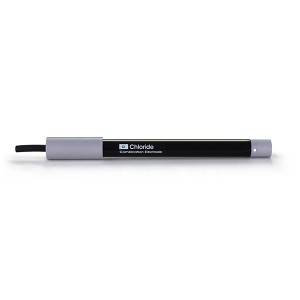
CS6511 Chloride Ion Sensor
The online chloride ion sensor uses a solid membrane ion selective electrode for testing chloride ions floating in water, which is fast, simple, accurate and economical. -
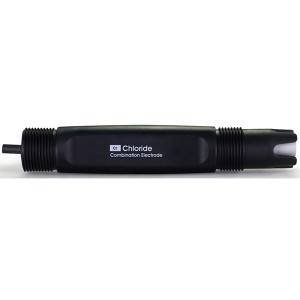
CS6711 Chloride Ion Sensor
The online chloride ion sensor uses a solid membrane ion selective electrode for testing chloride ions floating in water, which is fast, simple, accurate and economical. -
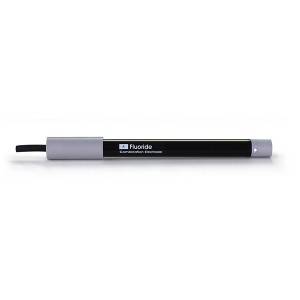
CS6510 Fluoride Ion Sensor
The fluoride ion selective electrode is a selective electrode sensitive to the concentration of fluoride ion, the most common one is the lanthanum fluoride electrode.
Lanthanum fluoride electrode is a sensor made of lanthanum fluoride single crystal doped with europium fluoride with lattice holes as the main material. This crystal film has the characteristics of fluoride ion migration in the lattice holes.
Therefore, it has very good ion conductivity. Using this crystal membrane, the fluoride ion electrode can be made by separating two fluoride ion solutions. The fluoride ion sensor has a selectivity coefficient of 1.
And there is almost no choice of other ions in the solution. The only ion with strong interference is OH-, which will react with lanthanum fluoride and affect the determination of fluoride ions. However, it can be adjusted to determine the sample pH <7 to avoid this interference. -

CS6520 Nitrate electrode
All of our Ion Selective (ISE) electrodes are available in many shapes and lengths to fit a wide variety of applications.
These Ion Selective Electrodes are designed to work with any modern pH/mV meter, ISE/concentration meter, or suitable on-line instrumentation.
The nitrite ion-selective electrode (ISE) is a specialized analytical sensor designed for the direct potentiometric measurement of nitrite ion (NO₂⁻) concentration in aqueous solutions. It is a critical tool in environmental monitoring, water treatment, food safety, and agricultural science, where nitrite levels serve as a key indicator of water pollution, process control in wastewater denitrification, and food preservation quality. -

CS6720 Nitrate electrode
All of our Ion Selective (ISE) electrodes are available in many shapes and lengths to fit a wide variety of applications.
These Ion Selective Electrodes are designed to work with any modern pH/mV meter, ISE/concentration meter, or suitable on-line instrumentation. -

CS6521 Nitrite electrode
The nitrite ion-selective electrode (ISE) is a specialized analytical sensor designed for the direct potentiometric measurement of nitrite ion (NO₂⁻) concentration in aqueous solutions. It is a critical tool in environmental monitoring, water treatment, food safety, and agricultural science, where nitrite levels serve as a key indicator of water pollution, process control in wastewater denitrification, and food preservation quality.
The core of a modern nitrite ISE is typically a polymer membrane or a crystalline solid-state sensor body impregnated with a nitrite-selective ionophore. This proprietary chemical component selectively binds nitrite ions, creating a potential difference across the membrane relative to a stable internal reference electrode. This measured voltage is logarithmically proportional to the activity (and thus concentration) of nitrite ions in the sample according to the Nernst equation.
A significant advantage of the nitrite ISE is its ability to provide rapid, real-time analysis without the need for complex sample preparation or colorimetric reagents required by traditional methods like the Griess assay. Modern electrodes are designed for both laboratory benchtop use and integration into online, continuous monitoring systems. However, careful calibration across the intended measurement range and awareness of potential interferences from ions like chloride or nitrate (depending on the membrane selectivity) are essential for obtaining accurate results. When used correctly, it offers a robust, cost-effective solution for the dedicated, routine measurement of nitrite.
All of our Ion Selective (ISE) electrodes are available in many shapes and lengths to fit a wide variety of applications.
These Ion Selective Electrodes are designed to work with any modern pH/mV meter, ISE/concentration meter, or suitable on-line instrumentation. -
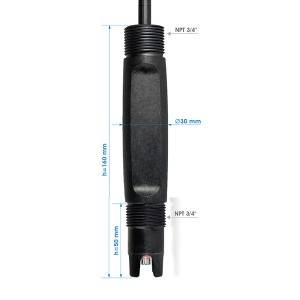
CS2768 ORP Electrode
✬Double salt bridge design, double layer seepage interface, resistant to medium reverse seepage.
✬The ceramic hole parameter electrode seeps out of the interface, which is not easy to be blocked.
✬High-strength glass bulb design, the glass appearance is stronger.
✬Large sensing bulbs increase the ability to sense hydrogen ions, and perform well in complex environment.
✬The electrode material PP has high impact resistance, mechanical strength and toughness, resistance to a variety of organic solvents and acid and alkali corrosion.
✬With strong anti-interference ability, high stability and long transmission distance. No poisoning under complex chemical environment. -
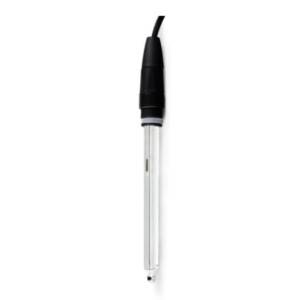
CS2543 ORP Sensor
Designed for common water quality.
Double salt bridge design, double layer seepage interface, resistant to medium reverse seepage.
The ceramic pore parameter electrode oozes out of the interface and is not easy to be blocked, which is suitable for monitoring of common water quality environmental media.
High-strength glass bulb design, the glass appearance is stronger.
The electrode adopts low noise cable, the signal output is farther and more stable
Large sensing bulbs increase the ability to sense hydrogen ions, and perform well in common water quality environment media. -
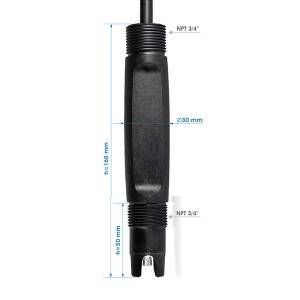
CS2700 ORP Sensor
Double salt bridge design, double layer seepage interface, resistant to medium reverse seepage.
The ceramic pore parameter electrode oozes out of the interface and is not easy to be blocked, which is suitable for monitoring of common water quality environmental media.
High-strength glass bulb design, the glass appearance is stronger.
The electrode adopts low noise cable, the signal output is farther and more stable
Large sensing bulbs increase the ability to sense hydrogen ions, and perform well in common water quality environment media. -
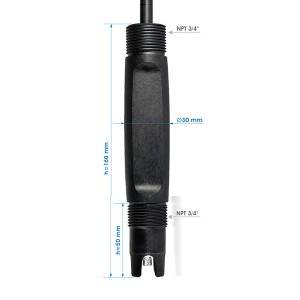
CS2701 ORP Electrode
Double salt bridge design, double layer seepage interface, resistant to medium reverse seepage.
The ceramic pore parameter electrode oozes out of the interface and is not easy to be blocked, which is suitable for monitoring of common water quality environmental media.
High-strength glass bulb design, the glass appearance is stronger.
The electrode adopts low noise cable, the signal output is farther and more stable
Large sensing bulbs increase the ability to sense hydrogen ions, and perform well in common water quality environment media. -
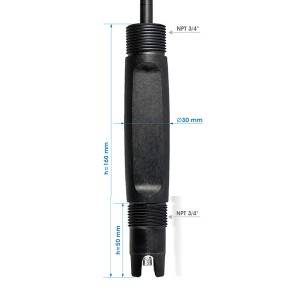
CS2733 ORP Sensor
Designed for common water quality.
Double salt bridge design, double layer seepage interface, resistant to medium reverse seepage.
The ceramic pore parameter electrode oozes out of the interface and is not easy to be blocked, which is suitable for monitoring of common water quality environmental media.
High-strength glass bulb design, the glass appearance is stronger.
The electrode adopts low noise cable, the signal output is farther and more stable
Large sensing bulbs increase the ability to sense hydrogen ions, and perform well in common water quality environment media. -
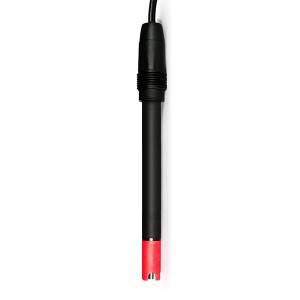
CS2668 ORP Sensor
Designed for Hydrofluoric acid environment.
The electrode is made of ultra-bottom impedance-sensitive glass film, and it also has the characteristics of fast response, accurate measurement, good stability, and not easy to hydrolyze in the case of hydrofluoric acid environment media. The reference electrode system is a non-porous, solid, non-exchange reference system. Completely avoid various problems caused by the exchange and blockage of the liquid junction,such as the reference electrode is easy to be polluted, reference vulcanization poisoning, reference loss and other problems. -
CS1668 pH Sensor
Designed for viscous fluids, protein environment, silicate, chromate, cyanide, NaOH, seawater, brine, petrochemical, natural gas liquids, high-pressure environment. -
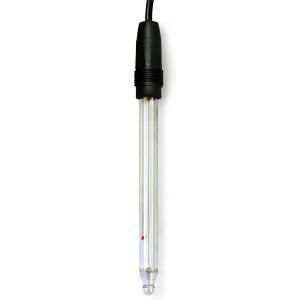
CS1500 pH Sensor
Designed for common water quality.
Double salt bridge design, double layer seepage interface, resistant to medium reverse seepage.
The ceramic pore parameter electrode oozes out of the interface and is not easy to be blocked, which is suitable for monitoring of common water quality environmental media.
High-strength glass bulb design, the glass appearance is stronger.
The electrode adopts low noise cable, the signal output is farther and more stable
Large sensing bulbs increase the ability to sense hydrogen ions, and perform well in common water quality environment media.