

Products
-

Conductivity Sensor Designed for Ultra-Pure Water CS3523
Suitable for low conductivity applications in the semiconductor, power, water and pharmaceutical industries, these sensors are compact and easy to use.The meter can be installed in several ways, one of which is through the compression gland, which is a simple and effective method of direct insertion into the process pipeline.The sensor is made from a combination of FDA-approved fluid receiving materials.This makes them ideal for monitoring pure water systems for the preparation of injectable solutions and similar applications.In this application, the sanitary crimping method is used for installation.When immersed, an alternating current is applied to prevent polarization, and the resulting current flow correlates directly to conductivity. Conductivity electrodes are widely used in water treatment, industrial process control, aquaculture, and laboratory testing. They often feature automatic temperature compensation and are available with digital [RS-485] or analog [4‑20mA] outputs, making them ideal for integration into online monitoring systems. -

CS3501Water Electrical 4-20ma Digital Conductivity Sensor Analyser
Conductivity sensor technology is an important field of engineering and technology research, used for the liquid conductivity measurement, is widely used in human production and life, as electric power, chemical industry, environmental protection, food, the semiconductor industry research and development, Marine industrial production and essential in the development of technology, a kind of testing and monitoring devices.The conductivity sensor is mainly used to measure and detect industrial production water, human living water, seawater characteristics and battery electrolyte properties. -
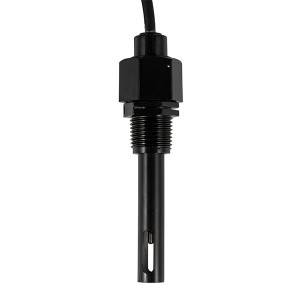
CS3601 Conductivity Sensor TDS EC Meter Temperature Tester
Conductivity sensor technology is an important field of engineering and technology research, used for the liquid conductivity measurement, is widely used in human production and life, as electric power, chemical industry, environmental protection, food, the semiconductor industry research and development, Marine industrial production and essential in the development of technology, a kind of testing and monitoring devices.The conductivity sensor is mainly used to measure and detect industrial production water, human living water, seawater characteristics and battery electrolyte properties.conductivity electrode is an essential sensor used to measure the electrical conductivity of a solution, indicating its ionic concentration and purity. It typically consists of two or four electrode rings made of materials like graphite, platinum, or stainless steel. -

CS3701 Electrical Conductivity Sensor 4-20ma Water quality monitoring
Conductivity sensor technology is an important field of engineering and technology research, used for the liquid conductivity measurement, is widely used in human production and life, as electric power, chemical industry, environmental protection, food, the semiconductor industry research and development, Marine industrial production and essential in the development of technology, a kind of testing and monitoring devices.The conductivity sensor is mainly used to measure and detect industrial production water, human living water, seawater characteristics and battery electrolyte properties.They often feature automatic temperature compensation and are available with digital [RS-485] or analog [4‑20mA] outputs, making them ideal for integration into online monitoring systems. Their robust design ensures consistent performance, even in harsh environments. -

CS3540 Industrial Electrical Conductivity Sensor Ph Electrode Probe
Measuring specific conductivity of aqueous solutions is becoming increasingly important for determining impurities in water.The measurement accuracy is greatly affected by temperature variation, polarization of the contact electrode surface, cable capacitance, etc.Twinno has designed a variety of sophisticated sensors and meters that can handle these measurements even in extreme conditions.
Twinno's 4-electrode sensor has been proven to operate over a wide range of conductivity values. It is made of PEEK and is suitable for simple PG13/5 process connections.The electrical interface is VARIOPIN, which is ideal for this process.
These sensors are designed for accurate measurements over a wide electrical conductivity range and are suitable for use in the pharmaceutical, food and beverage industries, where product and cleaning chemicals need to be monitored.Due to industry hygiene requirements, these sensors are suitable for steam sterilization and CIP cleaning.In addition, all parts are electrically polished and the materials used are FDA-approved. -

CS3640 Graphite Conductivity Electrode Water Quality
Measuring specific conductivity of aqueous solutions is becoming increasingly important for determining impurities in water.The measurement accuracy is greatly affected by temperature variation, polarization of the contact electrode surface, cable capacitance, etc.Twinno has designed a variety of sophisticated sensors and meters that can handle these measurements even in extreme conditions.
Twinno's 4-electrode sensor has been proven to operate over a wide range of conductivity values. It is made of PEEK and is suitable for simple PG13/5 process connections.The electrical interface is VARIOPIN, which is ideal for this process.
These sensors are designed for accurate measurements over a wide electrical conductivity range and are suitable for use in the pharmaceutical, food and beverage industries, where product and cleaning chemicals need to be monitored.Due to industry hygiene requirements, these sensors are suitable for steam sterilization and CIP cleaning.In addition, all parts are electrically polished and the materials used are FDA-approved. -
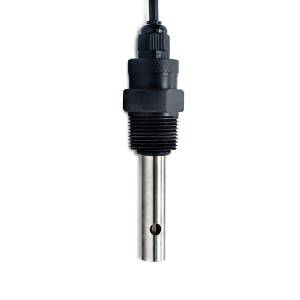
CS3522 Online electric conductivity probe
Measuring specific conductivity of aqueous solutions is becoming increasingly important for determining impurities in water.The measurement accuracy is greatly affected by temperature variation, polarization of the contact electrode surface, cable capacitance, etc.Twinno has designed a variety of sophisticated sensors and meters that can handle these measurements even in extreme conditions.Suitable for low conductivity applications in the semiconductor, power, water and pharmaceutical industries, these sensors are compact and easy to use.The meter can be installed in several ways, one of which is through the compression gland, which is a simple and effective method of direct insertion into the process pipeline. -

CS3740 Conductivity Sensor Salinity TDS Meter Electrode Probe Water
Measuring specific conductivity of aqueous solutions is becoming increasingly important for determining impurities in water.The measurement accuracy is greatly affected by temperature variation, polarization of the contact electrode surface, cable capacitance, etc.Twinno has designed a variety of sophisticated sensors and meters that can handle these measurements even in extreme conditions.
Twinno's 4-electrode sensor has been proven to operate over a wide range of conductivity values. It is made of PEEK and is suitable for simple PG13/5 process connections.The electrical interface is VARIOPIN, which is ideal for this process.
These sensors are designed for accurate measurements over a wide electrical conductivity range and are suitable for use in the pharmaceutical, food and beverage industries, where product and cleaning chemicals need to be monitored.Due to industry hygiene requirements, these sensors are suitable for steam sterilization and CIP cleaning.In addition, all parts are electrically polished and the materials used are FDA-approved. -
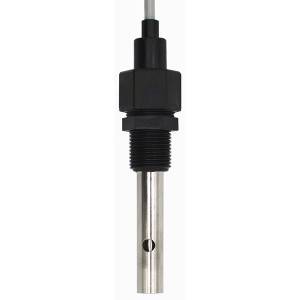
CS3633 industrial electrical iot Conductivity Meter
Measuring specific conductivity of aqueous solutions is becoming increasingly important for determining impurities in water.The measurement accuracy is greatly affected by temperature variation, polarization of the contact electrode surface, cable capacitance, etc.Twinno has designed a variety of sophisticated sensors and meters that can handle these measurements even in extreme conditions.The sensor is made from a combination of FDA-approved fluid receiving materials.This makes them ideal for monitoring pure water systems for the preparation of injectable solutions and similar applications.In this application, the sanitary crimping method is used for installation. -
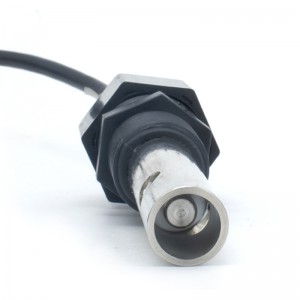
Conductivity Sensor Stainless Steel Conductivity Sensor for Wate CS3632
Designed for Pure, Boiler Feed water, Power Plant, Condensate Water.Measuring specific conductivity of aqueous solutions is becoming increasingly important for determining impurities in water.The measurement accuracy is greatly affected by temperature variation, polarization of the contact electrode surface, cable capacitance, etc.Twinno has designed a variety of sophisticated sensors and meters that can handle these measurements even in extreme conditions.Suitable for low conductivity applications in the semiconductor, power, water and pharmaceutical industries, these sensors are compact and easy to use.The meter can be installed in several ways, one of which is through the compression gland, which is a simple and effective method of direct insertion into the process pipeline. -
CS3633 Online Conductivity Sensor Probe for Surface Water RS485 EC
Suitable for low conductivity applications in the semiconductor, power, water and pharmaceutical industries, these sensors are compact and easy to use.The meter can be installed in several ways, one of which is through the compression gland, which is a simple and effective method of direct insertion into the process pipeline.The sensor is made from a combination of FDA-approved fluid receiving materials.This makes them ideal for monitoring pure water systems for the preparation of injectable solutions and similar applications.In this application, the sanitary crimping method is used for installation. -
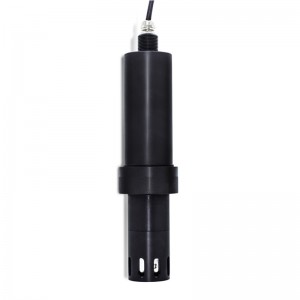
CS3640 Industrial Electrical Iot Conductivity Meter Monitor Tds Water Quality
Measuring specific conductivity of aqueous solutions is becoming increasingly important for determining impurities in water.The measurement accuracy is greatly affected by temperature variation, polarization of the contact electrode surface, cable capacitance, etc.Twinno has designed a variety of sophisticated sensors and meters that can handle these measurements even in extreme conditions.
Twinno's 4-electrode sensor has been proven to operate over a wide range of conductivity values. It is made of PEEK and is suitable for simple PG13/5 process connections.The electrical interface is VARIOPIN, which is ideal for this process.
These sensors are designed for accurate measurements over a wide electrical conductivity range and are suitable for use in the pharmaceutical, food and beverage industries, where product and cleaning chemicals need to be monitored.Due to industry hygiene requirements, these sensors are suitable for steam sterilization and CIP cleaning.In addition, all parts are electrically polished and the materials used are FDA-approved. -

CS3522 Conductivity Electrode for River or Fish Pool Monitoring
The conductivity industrial series of electrodes are specially used for the measurement of conductivity value of pure water, ultra-pure water, water treatment, etc. It is especially suitable for conductivity measurement in the thermal power plant and the water treatment industry. It is featured by the double-cylinder structure and the titanium alloy material, which can be naturally oxidized to form the chemical passivation. Its anti-infiltration conductive surface is resistant to all kinds of liquid except fluoride acid. The temperature compensation components are: NTC2.252K, 2K, 10K, 20K, 30K, ptl00, ptl000, etc. which are specified by the user.
They often feature automatic temperature compensation and are available with digital [RS-485] or analog [4‑20mA] outputs, making them ideal for integration into online monitoring systems. Their robust design ensures consistent performance, even in harsh environments. -

CS3532CF Conductivity Electrode
Adopt a four-electrode configuration, minimizes polarization effects, a common issue in traditional two-electrode sensors, leading to more stable and reliable measurements, capable of measuring a wide range of conductivity levels, from very low to very high range.The smooth flat surface design prevents any significant fouling, only low maintenance is required.Widely used in wastewater treatment, pharmaceuticals, food and beverage production, chemical processing, power generation, environmental monitoring, mining, electronics manufacturing, and desalination.The standard 3/4" thread is easy to install and replace, leak-proof, can be used in various systems.They often feature automatic temperature compensation and are available with digital [RS-485] or analog [4‑20mA] outputs, making them ideal for integration into online monitoring systems. Their robust design ensures consistent performance, even in harsh environments. -

CS3652C industrial conductivity probe tds electrode in water
The conductivity monitor is usually used to measure the conductivity in water, sewage, coolant, metal solution and other substances. In the industrial process, the conductivity of these substances can reflect the content of their impurities and ion concentrations, which helps engineers adjust the production process and optimize product quality. For example, in the pharmaceutical industry, conductivity monitors can be used to ensure the purity of pharmaceutical processes and to determine the quality standards of pharmaceutical products. It typically consists of two or four electrode rings made of materials like graphite, platinum, or stainless steel. When immersed, an alternating current is applied to prevent polarization, and the resulting current flow correlates directly to conductivity. Conductivity electrodes are widely used in water treatment, industrial process control, aquaculture, and laboratory testing. They often feature automatic temperature compensation and are available with digital [RS-485] or analog [4‑20mA] outputs, making them ideal for integration into online monitoring systems.