

Products
-
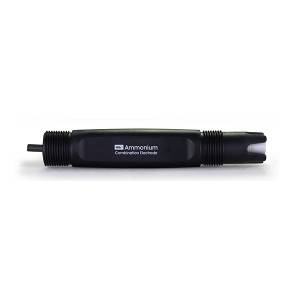
CS6721D Digital Nitrite Sensor
Digital Nitrate Ion Sensor is an online ion‑selective electrode (ISE) device for continuous measurement of nitrate‑nitrogen (NO₃⁻‑N) concentration in water. It operates on a PVC or polymer membrane ISE principle, combined with an integrated reference electrode and automatic temperature compensation (ATC), delivering accurate, drift‑free readings. The sensor directly outputs measurement data via RS‑485 (Modbus RTU), enabling plug‑and‑play integration into SCADA or IoT monitoring platforms. It features a durable, waterproof (IP68) body, typical range of 0–1000 mg/L, and low maintenance without reagent consumption. Common applications include drinking water safety monitoring (nitrate is regulated due to health risks), aquaculture (toxic to fish), agricultural runoff monitoring, and wastewater denitrification control. By providing real‑time nitrate data, the digital sensor helps optimize treatment processes, reduce chemical usage, ensure regulatory compliance, and protect public health and aquatic ecosystems. Compared to colorimetric analyzers, it requires no chemicals, no sample preparation, and has faster response and lower operating cost, making it essential for unattended, continuous water quality monitoring. -
CS6720D Digital Nitrate Ion Sensor
Digital Nitrate Ion Sensor is an online ion‑selective electrode (ISE) device for continuous measurement of nitrate‑nitrogen (NO₃⁻‑N) concentration in water. It operates on a PVC or polymer membrane ISE principle, combined with an integrated reference electrode and automatic temperature compensation (ATC), delivering accurate, drift‑free readings. The sensor directly outputs measurement data via RS‑485 (Modbus RTU), enabling plug‑and‑play integration into SCADA or IoT monitoring platforms. It features a durable, waterproof (IP68) body, typical range of 0–1000 mg/L, and low maintenance without reagent consumption. Common applications include drinking water safety monitoring (nitrate is regulated due to health risks), aquaculture (toxic to fish), agricultural runoff monitoring, and wastewater denitrification control. By providing real‑time nitrate data, the digital sensor helps optimize treatment processes, reduce chemical usage, ensure regulatory compliance, and protect public health and aquatic ecosystems. Compared to colorimetric analyzers, it requires no chemicals, no sample preparation, and has faster response and lower operating cost, making it essential for unattended, continuous water quality monitoring. -

CS6718D Digital Hardness Sensor (Ca Ion)
Digital Hardness Sensor is an online ion‑selective electrode (ISE) device for continuous measurement of calcium (Ca²⁺) and magnesium (Mg²⁺) ions in water, which together define total water hardness. It operates on a solid‑state or liquid‑membrane ISE principle combined with an integrated reference electrode and automatic temperature compensation (ATC), delivering accurate, drift‑free readings in real time. The sensor directly outputs measurement data via RS‑485 (Modbus RTU), enabling plug‑and‑play integration into SCADA or IoT monitoring platforms. It features a durable, waterproof (IP68) body, wide measurement range (e.g., 0–500 mg/L as CaCO₃), and low maintenance without reagents. Typical applications include boiler feedwater, cooling towers, industrial process water, reverse osmosis pretreatment, and drinking water hardness control. By providing continuous, reliable hardness data, the digital sensor helps prevent scaling, optimize chemical (e.g., anti‑scalant) dosing, protect pipes and equipment, and reduce operational and maintenance costs. Unlike traditional titration methods, it offers real‑time, 24/7 monitoring without manual sampling or laboratory analysis, making it essential for efficient industrial water management. -

CS6710D Digital Fluoride ion Sensor
Digital Fluoride Ion Sensor is an online analytical device designed for the continuous measurement of fluoride ion (F⁻) concentration in water. It operates on the ion‑selective electrode (ISE) principle using a solid‑state lanthanum fluoride (LaF₃) crystal membrane, which ensures excellent selectivity and stability in routine and industrial applications. The sensor includes an integrated reference electrode and automatic temperature compensation (ATC) to deliver accurate, drift‑free readings across a typical range of 0.01–2000 mg/L. It directly outputs measurement data via RS‑485 (Modbus RTU), allowing plug‑and‑play integration into SCADA or IoT monitoring platforms. The sensor features a durable, waterproof (IP68) body, long‑term stability without reagent consumption, and low maintenance, making it suitable for drinking water fluoridation control, wastewater treatment, and environmental monitoring. By providing real‑time, reliable fluoride data, the digital sensor helps optimize chemical dosing, ensure compliance with health and safety standards, and protect public health. -

CS6711D Digital Chloride ion Sensor
Digital Chloride Ion Sensor is an online analytical device designed for continuous, real-time measurement of chloride ion (Cl⁻) concentration in water and industrial solutions. It operates on the ion-selective electrode (ISE) principle, utilizing a solid-state or PVC membrane that responds selectively to chloride ions. The sensor features automatic temperature compensation (ATC) and a built-in reference electrode for drift-free, accurate readings. It directly outputs measurement data via RS-485 (Modbus RTU), enabling seamless integration into SCADA, IoT, or remote monitoring systems. Constructed with durable materials, it offers IP68 protection and low maintenance requirements. The sensor covers a typical measurement range of 0–50000 ppm (0–5%) and responds quickly. Its digital design eliminates signal interference, ensures plug-and-play connectivity, and supports remote calibration. Widely used applications include concrete corrosion monitoring, drinking water safety, industrial wastewater control, food processing, and road runoff testing. By providing continuous, reliable chloride data, it helps protect infrastructure, ensure public health, and reduce chemical dosing and operational risks in water treatment processes.
-

CS6714D Digital Ammonium Nitrogen Ion Sensor
The Digital Ammonium Nitrogen Ion Sensor is an advanced online analytical device for continuous monitoring of ammonium (NH₄⁺-N) concentration in water and wastewater. It operates on the principle of ion-selective electrode (ISE) technology, combined with a reference electrode and automatic temperature compensation (ATC) for accurate, drift-free readings. The sensor directly outputs digital data via RS-485 (Modbus RTU), enabling easy integration into SCADA or IoT systems. It features a robust IP68 housing, minimal maintenance (no reagents required), and a built‑in cleaning mechanism to prevent biofouling. The sensor is widely used in municipal wastewater treatment, aquaculture, drinking water source monitoring, and environmental protection. It measures ammonium nitrogen typically in the range of 0–1000 mg/L with fast response and high stability. Compared to traditional colorimetric analyzers, this sensor offers lower operating costs and real-time data, making it an essential tool for efficient process control and regulatory compliance. -
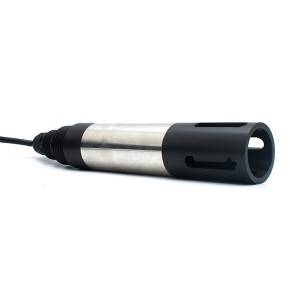
CS4773D Digital Dissolved Oxygen Sensor
Dissolved oxygen sensor is a new generation of intelligent water quality detection digital sensor independently developed by twinno. Data viewing, debugging and maintenance can be carried out through mobile APP or computer. Dissolved oxygen on-line detector has the advantages of simple maintenance, high stability, superior repeatability and multi-function. It can accurately measure DO value and temperature value in solution. Dissolved oxygen sensor is widely used in wastewater treatment, purified water, circulating water, boiler water and other systems, as well as electronics, aquaculture, food, printing and dyeing, electroplating, pharmaceutical, fermentation, chemical aquaculture and tap water and other solutions of the continuous monitoring of dissolved oxygen value. -

CS4760D Digital Dissolved Oxygen Sensor
Digital Dissolved Oxygen Sensor based on the fluorescence method is a modern, high-performance sensor for continuous DO measurement in water and wastewater. Unlike traditional polarographic or galvanic sensors, it uses an optical principle: a luminescent material is excited by blue light, and the decay time or intensity of the emitted red light is directly related to the oxygen concentration. This method requires no electrolyte, no membrane replacement, and has no oxygen consumption, significantly reducing maintenance and calibration frequency. The sensor features a built-in digital output (RS-485, Modbus RTU), automatic temperature and pressure compensation, and anti-interference design for stable readings even in low-flow or low-oxygen environments. It is widely used in aquaculture, municipal wastewater treatment, surface water monitoring, and industrial process control. With its durable construction, fast response, and long-term stability, the fluorescence DO sensor ensures accurate and reliable online monitoring for critical water quality management. -

CS3742D Conductivity Sensor
digital conductivity sensor is an advanced instrument for measuring the electrical conductivity of liquids, indicating total ionic concentration. It directly outputs calibrated readings in μS/cm or mS/cm via RS‑485 (Modbus RTU), eliminating signal conversion errors common in analog sensors. The sensor features two or four graphite or platinum electrodes with automatic temperature compensation (ATC) and a wide measurement range (e.g., 0‑2000 μS/cm to 0‑2000 mS/cm). Its smart design enables plug‑and‑play connection, remote calibration, and self‑diagnostics. Widely used in water treatment, reverse osmosis, chemical process, and aquaculture, the digital conductivity sensor provides reliable, real‑time data for industrial control and environmental monitoring.
-
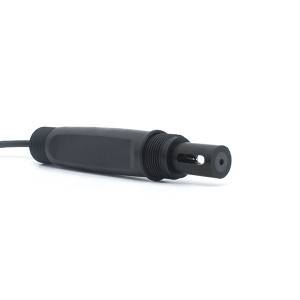
CS3701D Digital Conductivity Sensor
digital conductivity sensor is an advanced instrument for measuring the electrical conductivity of liquids, indicating total ionic concentration. It directly outputs calibrated readings in μS/cm or mS/cm via RS‑485 (Modbus RTU), eliminating signal conversion errors common in analog sensors. The sensor features two or four graphite or platinum electrodes with automatic temperature compensation (ATC) and a wide measurement range (e.g., 0‑2000 μS/cm to 0‑2000 mS/cm). Its smart design enables plug‑and‑play connection, remote calibration, and self‑diagnostics. Widely used in water treatment, reverse osmosis, chemical process, and aquaculture, the digital conductivity sensor provides reliable, real‑time data for industrial control and environmental monitoring. -

CS3501D Digital Conductivity Sensor
Measuring specific conductivity of aqueous solutions is becoming increasingly important for determining impurities in water. The measurement accuracy is greatly affected by temperature variation, polarization of the contact electrode surface, cable capacitance, etc.Twinno has designed a variety of sophisticated sensors and meters that can handle these measurements even in extreme conditions.
Suitable for low conductivity applications in the semiconductor, power, water and pharmaceutical industries, these sensors are compact and easy to use.The meter can be installed in several ways, one of which is through the compression gland, which is a simple and effective method of direct insertion into the process pipeline.
The sensor is made from a combination of FDA-approved fluid receiving materials. This makes them ideal for monitoring pure water systems for the preparation of injectable solutions and similar applications.In this application, the sanitary crimping method is used for installation. -
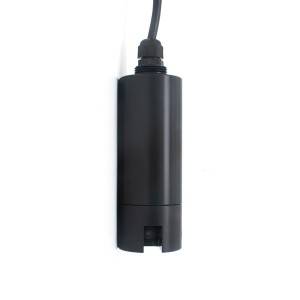
CS7920D Online Flow-through Turbidity Sensor
The principle of the turbidity sensor is based on the combined infrared absorption and scattered light method. The ISO7027 method can be used to continuously and accurately determine the turbidity value. According to ISO7027 infrared double-scattering light technology is not affected by chromaticity to determine the sludge concentration value. The self-cleaning function can be selected according to the use environment. Stable data, reliable performance; built-in self-diagnosis function to ensure accurate data; simple installation and calibration. -

CS7800D Online Turbidity Sensor
The electrode body is made of POM, which is corrosion-resistant and more durable. The seawater version can be plated with titanium, which also performs well under strong corrosion.IP68 waterproof design, can be used for input measurement. Real-time online recording of Turbidity/MLSS/SS, temperature data and curves, compatible with all water quality meters of our company.0.001-20.00NTU-200.00NTU-400NTU, a variety of measuring ranges are available, suitable for different working conditions, the measurement accuracy is less than ±5% of the measured value. -

CS3732C Conductivity Electrode Long type
Conductivity digital sensor is a new generation of intelligent water quality detection digital sensor independently developed by our company. High performance CPU chip is used to measure conductivity and temperature. The data can be viewed, debugged and maintained through mobile app or computer. It has the characteristics of simple maintenance, high stability, excellent repeatability and multifunction, and can accurately measure the conductivity value in solution. Environmental water discharge monitoring, Point source solution monitoring, Wastewater treatment works, Diffuse pollution monitoring, IoT Farm, IoT Agriculture Hydroponics sensor, Upstream Petrochemicals, Petroleum Processing, Paper Textiles waste water, Coal, Gold and Copper Mine, Oil and Gas Production and Exploration, River water quality monitoring, Groundwater water quality monitoring, etc -

On-line Acid and Alkali Salt Concentration Meter T6036
On-line Acid and Alkali Salt Concentration Meter is an industrial instrument designed for the continuous measurement and monitoring of acid, alkali, and salt concentrations in aqueous solutions. It operates on the principle of electromagnetic induction (toroidal conductivity), which eliminates electrode fouling and polarization, ensuring long-term stability in harsh chemical environments. The meter typically features a corrosion-resistant PFA or PVDF sensor body, automatic temperature compensation (ATC), and a wide measurement range (e.g., 0–2000 mS/cm). It provides real-time data via standard 4-20 mA and RS-485 Modbus outputs for seamless integration into process control systems. This device is widely applied in chemical manufacturing, metal cleaning, electroplating, wastewater treatment, and CIP systems. Key benefits include high accuracy, low maintenance, and reliable performance in measuring aggressive media such as hydrochloric acid, sulfuric acid, sodium hydroxide, and sodium chloride brines. It helps reduce chemical waste, control product quality, and enhance industrial safety.