

Featured Products
-
High Accuracy Digital Rs485 Tds Conductivity Meter Ec Meter And Sensor For Water CS3701D
CS3701D Digital Conductivity Sensor: Conductivity sensor technology is an important field of engineering technology research, suitable for low-conductivity applications in semiconductor, electric power, water and pharmaceutical industries. These sensors are compact and easy to use. Determining the specific conductivity of an aqueous solution is more and more important for determining the impurities in the water. The measurement accuracy is greatly affected by factors such as temperature changes, surface polarization of contact electrodes, and cable capacitance. -
Online Electrode Digital Conductivity Sensor For Industrial Water RS485 tds sensor CS3740D
Measuring specific conductivity of aqueous solutions is becoming increasingly important for determining impurities in water.The measurement accuracy is greatly affected by temperature variation, polarization of the contact electrode surface, cable capacitance, etc.Twinno has designed a variety of sophisticated sensors and meters that can handle these measurements even in extreme conditions.ItismadeofPEEKandissuitableforsimpleNPT3/4”process connections.Theelectricalinterfaceiscustomizable,whichisidealforthisprocess. Thesesensorsaredesignedforaccuratemeasurementsoverawideelectrical conductivityrangeandaresuitableforuseinthepharmaceutical,foodandbeverage industries,whereproductandcleaningchemicalsneedtobemonitored. -

Digital Conductivity Sensor Online TDS Sensor Electrode For Industrial Water RS485 CS3740PCD
Measuring specific conductivity of aqueous solutions is becoming increasingly important for determining impurities in water.The measurement accuracy is greatly affected by temperature variation, polarization of the contact electrode surface, cable capacitance, etc.Twinno has designed a variety of sophisticated sensors and meters that can handle these measurements even in extreme conditions.ItismadeofPEEKandissuitableforsimpleNPT3/4”process connections.Theelectricalinterfaceiscustomizable,whichisidealforthisprocess. Thesesensorsaredesignedforaccuratemeasurementsoverawideelectrical conductivityrangeandaresuitableforuseinthepharmaceutical,foodandbeverage industries,whereproductandcleaningchemicalsneedtobemonitored. -

Factory price DO TSS EC TDS Meter Tester online industrial PH controller ORP Salinity T6700
Typical applications include seawater monitoring, aquaculture (fish/shrimp farming to control osmotic stress), ballast water treatment, industrial wastewater, desalination plant feedwater and brine monitoring, and agricultural drainage. Measurement ranges typically cover 0–70 PSU (or 0–70000 mg/L). Unlike traditional refractometers or hydrometers, the digital sensor provides real‑time, continuous data without manual sampling or laboratory analysis. By delivering continuous, reliable salinity readings, the digital salinity meter helps optimize irrigation, protect aquatic life, ensure discharge compliance, and reduce operational and maintenance costs. Its plug‑and‑play design makes it an essential tool for both field and industrial water quality monitoring. -
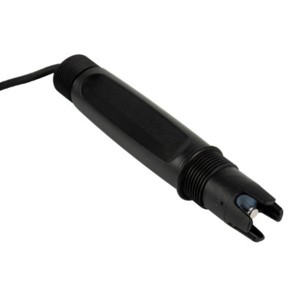
CS2733D Digital Oxido Reduction Potential ORP Sensor Electrode Probe
Digital Glass pH/ORP Probe Sensor is a combination electrode used for continuous measurement of both pH (acidity/alkalinity) and ORP (oxidation‑reduction potential) in water. It integrates a low‑impedance glass pH sensing bulb and a platinum ORP sensing band into a single rugged body, along with a built‑in reference electrode and temperature sensor. This dual‑parameter design reduces installation space and maintenance. The sensor directly outputs digital data via RS‑485 (Modbus RTU) with automatic temperature compensation (ATC) for accurate, drift‑free readings over a wide range (pH 0–14, ORP ±2000 mV). Its durable, waterproof (IP68) housing and low‑maintenance design are suitable for demanding applications such as wastewater treatment, industrial process control, aquaculture, and drinking water monitoring. The digital glass pH/ORP sensor provides plug‑and‑play connectivity, remote calibration, and seamless integration into SCADA or IoT platforms. By delivering continuous, real‑time pH and ORP data, it helps optimize chemical dosing (acid/alkali for pH, chlorine/ozone for ORP), ensure effective disinfection, control corrosion and scaling, and maintain regulatory compliance. Its high‑quality glass membrane and reference junction offer long‑term stability, fast response, and reliable performance in harsh environments, making it an essential tool for unattended, continuous water quality monitoring. -

CE Digital Salinity/Ec/Conductivity Meter Ultra Pure Water Sensor CS3743D
For continuous monitoring and control of conductivity / TDS and temperature values of aqueous solutions. Widely used in power plants, petrochemical, metallurgy, paper industry, environmental water treatmen and other fields. For example, monitoring and control of raw water and water quality of water production equipment such as recharge water, saturated water, condensate water and furnace water, ion exchange, reverse osmosis EDL,seawater distillation 。Digital Salinity Meter is an online analytical device for continuous measurement of salinity in water, typically expressed in practical salinity units (PSU), parts per thousand (ppt), or mg/L (ppm). It operates by measuring electrical conductivity (µS/cm or mS/cm) and converting the value to salinity using a built‑in algorithm and automatic temperature compensation (ATC), ensuring accurate readings over a wide temperature range (e.g., 0–60°C). The sensor directly outputs measurement data via RS‑485 (Modbus RTU) or 4–20 mA, enabling plug‑and‑play integration into SCADA or IoT monitoring platforms. It features a rugged, waterproof (IP68) housing, fast response, and low maintenance. Typical applications include seawater monitoring, aquaculture (fish/shrimp farming to control osmotic stress), ballast water treatment, industrial wastewater, desalination plant feedwater and brine monitoring, and agricultural drainage. Measurement ranges typically cover 0–70 PSU (or 0–70000 mg/L). Unlike traditional refractometers or hydrometers, the digital sensor provides real‑time, continuous data without manual sampling or laboratory analysis. By delivering continuous, reliable salinity readings, the digital salinity meter helps optimize irrigation, protect aquatic life, ensure discharge compliance, and reduce operational and maintenance costs. Its plug‑and‑play design makes it an essential tool for both field and industrial water quality monitoring. -

Digital RS485 Ammonia Nitrogen Sensor Potassium Ion Compensation NH3 NH4 CS6015D
Digital NH₃-N Ammonia Nitrogen Sensor is an online analytical device for continuous measurement of ammonia nitrogen concentration in water and wastewater. It typically operates on the ion-selective electrode (ISE) principle combined with a gas-permeable membrane. Ammonia gas diffuses through the membrane into an internal electrolyte, causing a pH change that is directly proportional to the NH₃-N concentration. The sensor features automatic temperature compensation (ATC), a built-in reference electrode, and direct digital output (RS-485, Modbus RTU) for seamless integration into SCADA or IoT platforms. Its robust, waterproof (IP68) housing ensures reliable performance in harsh environments. Common applications include municipal wastewater treatment (aeration tank and effluent monitoring), aquaculture (toxicity control), drinking water source protection, and industrial process control. Typical range is 0–1000 mg/L with fast response and low maintenance. Compared to colorimetric analyzers, this sensor requires no reagents, no sample preparation, and provides real-time data. It helps optimize aeration, reduce energy and chemical costs, ensure regulatory compliance, and protect aquatic life. Its digital design eliminates signal interference and enables plug‑and‑play connectivity, remote calibration, and long-term stability, making it essential for unattended, continuous water quality monitoring. -

T4043 Online Conductivity / Resistivity /TDS / Salinity Meter
Industrial online conductivity meter is a microprocessor-based water quality online monitoring control instrument, the salinometer measures and supervises the salinity (salt content) by conductivity measurement in fresh water. The measured value is displayed as ppm and by comparing the measured value to a user defined alarm set point value, relay outputs are available to indicate if salinity is above or below the alarm set point value.This instrument is widely used in power plants, petrochemical industry, metallurgical electronics, mining industry, paper industry, medicine, food and beverage, water treatment, modern agricultural planting and other industries. It is suitable for softening water, raw water, steam condensate water, seawater distillation and deionized water, etc. It can continuously monitor and control the conductivity, resistivity, TDS, salinity and temperature of aqueous solutions. -

CS3701CD Online Digital Graphite Conductivity EC TDS Salinity Sensor with CE RS485
Designed for Pure, Boiler Feed water, Power Plant, Condensate Water.
Easy to connect to PLC, DCS, for Aquaculture and Hydroponics with CE industrial control computers, general purpose controllers, paperless recording instruments or touch screens and other third party devices.Unlike traditional electrode sensors, it uses two toroidal coils encapsulated in corrosion-resistant material such as PFA or PVDF. An alternating current in the drive coil induces a voltage in the liquid, and the receiving coil measures the resulting current, which is proportional to conductivity. This design eliminates electrode fouling and polarization, ensuring long-term stability in harsh environments. Electromagnetic sensors are ideal for measuring strong acids, alkalis, saline solutions, and wastewater. They provide a wide measurement range (e.g., 0–2000 mS/cm) and feature automatic temperature compensation. With analog and digital outputs (4-20mA, Modbus RS-485), they integrate seamlessly into industrial control systems for reliable online monitoring. -

T4046 Online Fluorescence Dissolved Oxygen Meter Analyzer
Online Dissolved Oxygen Meter T4046 Industrial online dissolved oxygen meter is an online water quality monitor and control instrument with microprocessor. The instrument is equipped with fluorescent dissolved oxygen sensors. The online dissolved oxygen meter is a highly intelligent online continuous monitor. It can be equipped with fluorescent electrodes to automatically achieve a wide range of ppm measurement. It is a special instrument for detecting oxygen content in liquids in environmental protection sewage related industries.The online dissolved oxygen meter is a special instrument for
detecting oxygen content in liquids in environmental protection sewage related industries. It has the characteristics of fast response, stability, reliability, and low use cost, and is suitable for large-scale use in water plants, aeration tanks, aquaculture, and sewage treatment plants. -

Sensor Analyzer Online Solid Suspended Meter / Turbidity probe / TSS analyzer T6075
Water plant (sedimentation tank), paper plant (pulp concentration), coal washing plant
(sedimentation tank), power plant (mortar sedimentation tank), sewage treatment plant
(inlet and outlet, aeration tank, backflow sludge, primary sedimentation tank, secondary sedimentation tank, concentration tank, sludge dehydration).
Features and functions:
●Large color LCD display.
●Intelligent menu operation.
●Data Recording /Curve display/Data upload function.
●Multiple automatic calibration to ensure the accuracy.
●Differential signal model, stable and reliable.
●Three relay control switches.
●High & low alarm and hysteresis control.
●4-20mA&RS485 Multiple output modes.
●Password protection to prevent misoperation by non-staff. -
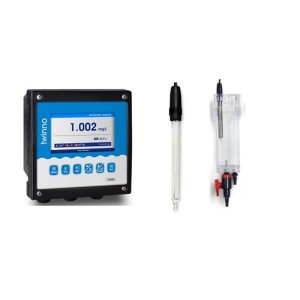
Manufacturer Digital Dissolved O3 Ozone Sensor Water Monitor Meter CS6530D
Potentiostatic method electrode is used to measure residual chlorine or dissolved ozone in water. The potentiostatic method measurement method is to maintain a stable potential at the electrode measuring end, and different measured components produce different current intensities under this potential. It consists of two platinum electrodes and a reference electrode to form a micro current measurement system. The residual chlorine or dissolved ozone in the water sample flowing through the measuring electrode will be consumed. Therefore, the water sample must be kept flowing continuously through the measuring electrode during measurement. The potentiostatic method measurement method uses a secondary instrument to continuously and dynamically control the potential between the measuring electrodes, eliminating the inherent resistance and oxidation-reduction potential of the measured water sample, so that the electrode can measure the current signal and the measured water sample concentration A good linear relationship is formed between them, with a very stable zero point performance, ensuring accurate and reliable measurement -
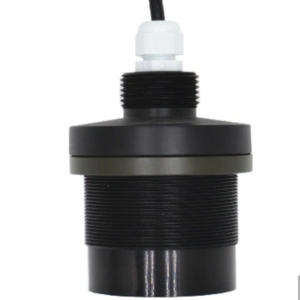
Digital Water Liquid Level Meter Ultrasonic Level Meter Sensor CS6085D
Intelligent integrated measuring instrument is a transducer and built-in intelligent circuit control system of integrated measurement instrument, is to measure the probe surface to liquid, object surface distance, is a contactless, high reliability, high cost performance, easy installation and maintenance material, liquid level measurement instrument, widely used in non-contact measurement distance, reliable application to measuring the surface position of water, sewage, glue, mud or open channel flow, etc. -
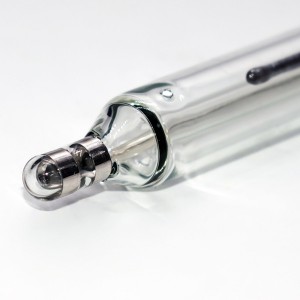
Online Digital Chlorine Dioxide Sensor for Disinfectant Fluid RS485 CS5560D
Constant voltage principle electrode is used to measure chlorine dioxide or hypochlorous acid in water. The constant voltage measurement method is to maintain a stable potential at the electrode measuring end, and different measured components produce different current intensities under this potential. -
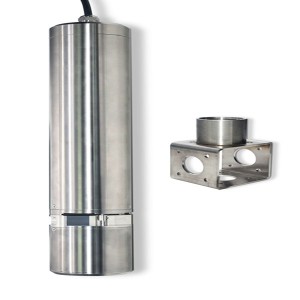
Spectrometric (NO3-N ) Nitrate Nitrogen Sensor for Water Quality Testing for Fishing Farm CS6800D
NO3 absorbs ultraviolet light at 210 nm. When the probe works, the water sample flows through the slit. When the light emitted by the light source in the probe passes through the slit, part of the light is absorbed by the sample flowing in the slit. The other light passes through the sample and reaches the detector on the other side of the probe to calculate the nitrate concentration.