

Products
-

CS6401D Water Quality Sensor RS485 Blue-Green Algae Sensor
CS6041D blue-green algae sensor uses the characteristic of cyanobacteria having absorption peak and emission peak in the spectrum to emit monochromatic light of a specific wavelength to the water. Cyanobacteria in the water absorb the energy of this monochromatic light and release monochromatic light of another wavelength. The light intensity emitted by cyanobacteria is proportional to the content of cyanobacteria in the water.Based on the fluorescence of the pigments to measurement the target parameters , it can be identified before the impact of algal bloom.No need for extraction or other treatment, rapid detection, to avoid the impact of shelving water samples;Digital sensor, strong anti-interference ability, long transmission distance;Standard digital signal output can be integrated and networked with other devices without controller. -
CS3742D Conductivity Sensor
conductivity sensor is an analytical device for measuring the electrical conductivity of a liquid, which directly reflects its total ion concentration and purity. It operates on the principle of applying an alternating voltage between two or four electrode rings (typically made of graphite or platinum) to prevent polarization. The sensor includes a built‑in temperature sensor for automatic temperature compensation (ATC), ensuring accurate readings across varying temperatures. Conductivity sensors are widely used in water treatment (e.g., reverse osmosis, boiler feedwater), industrial process control, aquaculture, hydroponics, and environmental monitoring. They can measure from ultra‑pure water (0.055 µS/cm) to high‑concentration brines (up to 2000 mS/cm). Output options include 4‑20 mA, RS‑485 (Modbus), or digital protocols, enabling seamless integration into SCADA or IoT platforms. The sensor is housed in a durable, waterproof (IP68) body with anti‑fouling materials. Regular calibration ensures long‑term stability. By delivering real‑time conductivity data, the sensor helps operators optimize chemical dosing, monitor product quality, protect equipment from corrosion or scaling, and ensure regulatory compliance. It is an essential, cost‑effective tool for continuous, unattended water quality monitoring in both industrial and environmental applications. -

CS6602CD Digital RS485 Output COD BOD TOC Sensor
COD sensor is a UV absorption COD sensor, combined with a lot of application experience, based on the original basis of a number of upgrades, not only the size is smaller, but also the original separate cleaning brush to do one, so that the installation is more convenient, with higher reliability.
It does not need reagent, no pollution, more economic and environmental protection.On-line uninterrupted water quality monitoring.Automatic compensation for turbidity interference, with automatic cleaning device, even if long-term monitoring still has excellent stability.
Many organic compounds dissolved in water are absorbent to ultraviolet light. Therefore, the total amount of organic pollutants in the water can be measured by measuring the extent to which these organics absorb ultraviolet light at 254nm. -

CS6603CD Digital RS485 Output COD BOD TOC TURBIDITY Sensor
Digital RS485 Output COD Sensor is an advanced online instrument for continuous, real‑time measurement of Chemical Oxygen Demand (COD) in water and wastewater. Unlike conventional COD analyzers that rely on wet chemistry (dichromate digestion, colorimetry), this optical sensor uses UV‑vis absorption spectroscopy at multiple wavelengths (e.g., 254 nm for organic matter, 550 nm for turbidity compensation) to estimate COD without reagents or sample digestion. The sensor integrates a xenon or LED light source, a photodetector array, and a built‑in temperature sensor for automatic compensation (ATC). It directly outputs COD values in mg/L via RS‑485 (Modbus RTU), enabling plug‑and‑play integration into SCADA or IoT platforms. Its rugged, waterproof (IP68) housing and low‑maintenance design (no pumps, no tubing, no reagents) are suitable for continuous submersed operation in wastewater influent/effluent channels, industrial discharge, and surface water monitoring. Typical COD range is 0–2000 mg/L, with response time of < 30 seconds. While optical COD sensors require site‑specific calibration against standard dichromate methods, they provide rapid trend data and early warning of organic pollution spikes, helping operators optimize aeration, reduce chemical usage, and prevent permit violations. The digital RS485 output ensures long‑distance data transmission (up to 1200 m) without signal degradation, supports multi‑sensor networking (daisy‑chain), and enables remote calibration and self‑diagnostics. Compared to conventional COD analyzers, this digital sensor eliminates the need for expensive reagents, hazardous waste disposal, and frequent maintenance, significantly reducing operational costs and environmental footprint, making it an essential tool for unattended, continuous water quality monitoring in both industrial and municipal applications. It is particularly suitable for applications where rapid trend detection and low maintenance are prioritized over laboratory‑grade absolute accuracy, such as early warning systems, process control in biological treatment, and pollutant load estimation. -

Digital RS485 Optical Nitrate Nitrogen Sensor NO3-N–CS6802CD
Digital Nitrite Nitrogen Sensor is an online analytical device for continuous measurement of nitrite‑nitrogen (NO₂⁻‑N) concentration in water and wastewater. It operates on the ion‑selective electrode (ISE) principle or an electrochemical method with a polymeric membrane, providing high selectivity and rapid response without the need for reagents or sample preparation. The sensor integrates a built‑in reference electrode and automatic temperature compensation (ATC) for accurate, drift‑free readings over a typical range of 0–10 mg/L. It directly outputs digital data via RS‑485 (Modbus RTU), enabling plug‑and‑play integration into SCADA or IoT platforms. Its durable, waterproof (IP68) housing and low‑maintenance design are suitable for continuous monitoring in aeration tanks, effluent channels, drinking water sources, and aquaculture systems. Nitrite is an intermediate product of nitrification and denitrification; excess levels are toxic to fish and indicate incomplete biological treatment. By delivering real‑time nitrite data, the sensor helps optimize aeration and carbon dosing, improve nitrogen removal efficiency, reduce energy and chemical costs, and ensure compliance with discharge limits (e.g., <1 mg/L for drinking water). Compared to colorimetric analyzers, this ISE‑based sensor requires no chemical reagents, no sample filtration, and has faster response, lower operational cost, and simpler maintenance. Its digital output supports remote calibration, self‑diagnostics, and unattended continuous water quality monitoring, making it an essential tool for wastewater treatment plants, environmental agencies, and aquaculture farms. The sensor can be directly submersed into tanks or channels, providing real‑time data without pumping or sample conditioning, thus ensuring rapid detection of process upsets and timely corrective actions. -

CS6805CD Digital Optical RS485 Nitrite Nitrogen Sensor NO2-N
Digital Nitrite Nitrogen Sensor is an online analytical device for continuous measurement of nitrite‑nitrogen (NO₂⁻‑N) concentration in water and wastewater. It operates on the ion‑selective electrode (ISE) principle or an electrochemical method with a polymeric membrane, providing high selectivity and rapid response without the need for reagents or sample preparation. The sensor integrates a built‑in reference electrode and automatic temperature compensation (ATC) for accurate, drift‑free readings over a typical range of 0–10 mg/L. It directly outputs digital data via RS‑485 (Modbus RTU), enabling plug‑and‑play integration into SCADA or IoT platforms. Its durable, waterproof (IP68) housing and low‑maintenance design are suitable for continuous monitoring in aeration tanks, effluent channels, drinking water sources, and aquaculture systems. Nitrite is an intermediate product of nitrification and denitrification; excess levels are toxic to fish and indicate incomplete biological treatment. By delivering real‑time nitrite data, the sensor helps optimize aeration and carbon dosing, improve nitrogen removal efficiency, reduce energy and chemical costs, and ensure compliance with discharge limits (e.g., <1 mg/L for drinking water). Compared to colorimetric analyzers, this ISE‑based sensor requires no chemical reagents, no sample filtration, and has faster response, lower operational cost, and simpler maintenance. Its digital output supports remote calibration, self‑diagnostics, and unattended continuous water quality monitoring, making it an essential tool for wastewater treatment plants, environmental agencies, and aquaculture farms. The sensor can be directly submersed into tanks or channels, providing real‑time data without pumping or sample conditioning, thus ensuring rapid detection of process upsets and timely corrective actions. -

RS485 Chlorophyll Blue-Green Algae Color Turbidity Sensor T6400
online sensor is a multi‑parameter instrument for continuous, real‑time monitoring of chlorophyll‑a, phycocyanin (blue‑green algae), true color, and turbidity in natural water, drinking water reservoirs, and recreational lakes. It combines multiple optical principles in a single compact probe: fluorescence for chlorophyll and blue‑green algae, absorbance for color (Pt‑Co units), and nephelometry (90° scattered light) for turbidity (NTU or FNU). All measurements are automatically temperature compensated (ATC) for stable readings across varying field conditions. The sensor directly outputs digital data via RS‑485 (Modbus RTU), enabling plug‑and‑play integration into SCADA or IoT platforms. Its rugged, waterproof (IP68) housing and built‑in wiper or air‑blast self‑cleaning mechanism prevent biofouling, ensuring long‑term reliability in harsh aquatic environments. Typical applications include harmful algal bloom (HAB) early warning, drinking water reservoir monitoring, aquaculture, and environmental protection. By providing simultaneous, real‑time data on algae density, color, and turbidity, this multi‑parameter sensor helps water utilities optimize treatment processes (e.g., coagulation, filtration), reduce chemical costs, prevent cyanotoxin risks, and ensure regulatory compliance. Compared to discrete laboratory analyses, the sensor eliminates sampling delays, reduces labor, and enables truly continuous, unattended water quality monitoring. Its multi‑parameter, single‑probe design lowers installation and maintenance costs while delivering comprehensive situational awareness for proactive water management. -

COD Analyzer with Real-Time Monitoring Customized OEM Support for Chemical Industry SC6000UVCOD
The Online COD Analyzer is a state-of-the-art instrument designed for continuous, real-time measurement of Chemical Oxygen Demand(COD) in water. Utilizing advanced UV oxidation technology, this analyzer delivers precise and reliable data to optimizewastewater treatment, ensure regulatory compliance, and reduce operational costs. Ideal for harsh industrial environments, it features rugged construction, minimal maintenance, and seamless integration with control systems.
✅ High Precision & Reliability
Dual-wavelength UV detection compensates for turbidity and color interference.
Automatic temperature and pressure correction for lab-grade accuracy.
✅ Low Maintenance & Cost-Effective
Self-cleaning system prevents clogging in high-solids wastewater.
Reagent-free operation reduces consumable costs by 60% compared to traditional methods.
✅ Smart Connectivity & Alarms
Real-time data transmission to SCADA, PLC, or cloud platforms (IoT-ready).
Configurable alarms for COD threshold breaches (e.g., >100 mg/L).
✅ Industrial Durability
Corrosion-resistant design for acidic/alkaline environments (pH 2-12). -

CS5530CD Digital Free Chlorine Sensor
CS5530CD digital free chlorine sensor adopts advanced non-film voltage sensor, no need to replace the diaphragm and agent, stable performance, simple maintenance. It has the characteristics of high sensitivity, rapid response, accurate measurement, high stability, superior repeatability, easy maintenance and multi-function, and can accurately measure the free chlorine value in solution. It is widely used for automatic dosing of circulating water, chlorination control of swimming pool, continuous monitoring and control of residual chlorine content in water solution of drinking water treatment plant, drinking water distribution network, swimming pool and hospital wastewater. -

Portable pH/ORP/Temp Meter PH300
Portable pH/ORP/Temp Meter is a handheld, multi‑parameter instrument for on‑site measurement of acidity (pH), oxidation‑reduction potential (ORP), and temperature in water and other aqueous solutions. It features a single, interchangeable probe that houses high‑impedance glass pH sensing elements, a platinum ORP band, and a built‑in temperature sensor (ATC) for automatic compensation, ensuring accurate readings across the full 0–14 pH range and ±2000 mV ORP. The rugged, waterproof (IP67) housing withstands harsh field conditions, and the backlit LCD displays all three parameters simultaneously. The meter stores up to 500 data points with time/date stamps and offers USB or Bluetooth connectivity for data transfer and analysis. Powered by rechargeable batteries or standard AA cells, it supports long‑duration field campaigns. Common applications include environmental monitoring (rivers, lakes, groundwater), wastewater treatment, aquaculture, swimming pools, hydroponics, and industrial process control. Key benefits include fast response, one‑touch calibration, and low maintenance. The portable pH/ORP/temp meter is an essential tool for field professionals who need reliable, real‑time water quality data without the need for benchtop laboratory instruments. It helps optimize chemical dosing (acid/alkali, chlorine/ozone), ensure regulatory compliance, and monitor aquatic health efficiently. -

PH300 Portable PH/ORP/lon/Temp Meter
Portable pH/ORP/Temp Meter is a handheld, multi‑parameter instrument for on‑site measurement of acidity (pH), oxidation‑reduction potential (ORP), and temperature in water and other aqueous solutions. It features a single, interchangeable probe that houses high‑impedance glass pH sensing elements, a platinum ORP band, and a built‑in temperature sensor (ATC) for automatic compensation, ensuring accurate readings across the full 0–14 pH range and ±2000 mV ORP. The rugged, waterproof (IP67) housing withstands harsh field conditions, and the backlit LCD displays all three parameters simultaneously. The meter stores up to 500 data points with time/date stamps and offers USB or Bluetooth connectivity for data transfer and analysis. Powered by rechargeable batteries or standard AA cells, it supports long‑duration field campaigns. Common applications include environmental monitoring (rivers, lakes, groundwater), wastewater treatment, aquaculture, swimming pools, hydroponics, and industrial process control. Key benefits include fast response, one‑touch calibration, and low maintenance. The portable pH/ORP/temp meter is an essential tool for field professionals who need reliable, real‑time water quality data without the need for benchtop laboratory instruments. It helps optimize chemical dosing (acid/alkali, chlorine/ozone), ensure regulatory compliance, and monitor aquatic health efficiently.
-
CS1797D Digital pH Sensor
Digital pH Sensor is an online analytical device for continuous measurement of hydrogen ion activity (pH) in water. It features a rugged combination electrode with a low‑impedance glass sensing bulb and an integral reference electrode. The sensor directly outputs digital data via RS‑485 (Modbus RTU) with automatic temperature compensation (ATC), delivering accurate readings over the full 0–14 pH range. Its durable, waterproof (IP68) housing and low‑maintenance design are suitable for demanding environments such as wastewater treatment, industrial process control, aquaculture, and drinking water monitoring. Unlike analog pH sensors, the digital version eliminates signal interference, supports remote calibration and self‑diagnostics, and enables plug‑and‑play connectivity without cable length restrictions. By providing continuous, real‑time pH data, it helps optimize chemical dosing (acid/alkali), ensure regulatory compliance, and maintain optimal conditions for biological and chemical processes. The digital pH sensor is an essential tool for unattended, continuous water quality monitoring, offering long‑term stability, fast response, and reduced operational and maintenance costs. Its output can be directly integrated into SCADA or IoT platforms, making it ideal for both municipal and industrial applications. -

CS6712D Digital Potassium Ion Sensor
Digital Potassium Ion Sensor is an online analytical device for continuous measurement of potassium ion (K⁺) concentration in water, wastewater, and other aqueous solutions. It operates on the principle of ion‑selective electrode (ISE), typically using a valinomycin‑based polymer membrane, which provides exceptional selectivity for potassium over other cations such as sodium (Na⁺) and calcium (Ca²⁺). The sensor integrates a reference electrode and automatic temperature compensation (ATC), delivering accurate, drift‑free readings over a wide range (e.g., 0–1000 mg/L). It directly outputs digital data via RS‑485 (Modbus RTU), enabling plug‑and‑play integration into SCADA or IoT platforms. Its robust, waterproof (IP68) housing and low‑maintenance design make it suitable for demanding applications such as drinking water monitoring, wastewater treatment, aquaculture, agricultural runoff control, and industrial process control. Unlike colorimetric or flame photometry methods, the ISE‑based sensor requires no reagents, no sample preparation, and provides real‑time data. By delivering continuous, reliable potassium readings, it helps optimize nutrient management (e.g., in hydroponics or fertilizer dosing), monitor water quality in rivers and lakes, and ensure compliance with environmental discharge limits. The digital output eliminates signal interference, supports remote calibration and self‑diagnostics, and reduces operational and maintenance costs, making it an essential tool for unattended, continuous water quality monitoring. -
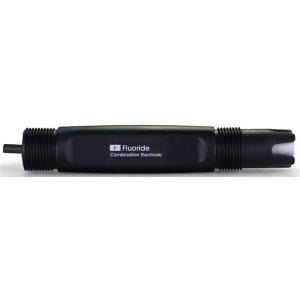
CS6710D Digital Fluoride ion Sensor
Digital Fluoride Ion Sensor is an online analytical device for continuous measurement of fluoride ion (F⁻) concentration in water. It operates on the principle of ion‑selective electrode (ISE) with a solid‑state lanthanum fluoride (LaF₃) crystal membrane, ensuring high selectivity and stability. The sensor integrates a reference electrode and automatic temperature compensation (ATC) for accurate, drift‑free readings over a typical range of 0.01–2000 mg/L. It directly outputs digital data via RS‑485 (Modbus RTU), enabling plug‑and‑play integration into SCADA or IoT platforms. The durable, waterproof (IP68) housing and low‑maintenance design make it suitable for drinking water fluoridation control, wastewater treatment, and industrial process monitoring. Compared to colorimetric methods, this sensor requires no reagents, no sample preparation, and provides real‑time data. By delivering continuous, reliable fluoride readings, it helps optimize chemical dosing, ensure compliance with health standards (e.g., WHO guideline 0.5–1.5 mg/L), and protect public health. Its digital output eliminates signal interference, supports remote calibration, and reduces operational costs, making it an essential tool for unattended, continuous water quality monitoring. -

CS5530D Digital Residual Chlorine Sensor
This fluorescence method offers high sensitivity (detection limits as low as 0.01 µg/L), fast response (seconds), and requires no reagents or sample preparation. The analyzer features automatic cleaning (e.g., wiper or air‑blast) to prevent biofouling, automatic temperature compensation, and direct digital output (RS‑485, Modbus RTU) for SCADA or IoT integration. Its robust, waterproof (IP68) housing is suitable for submerged or flow‑through installation in harsh environments. Typical applications include drinking water reservoir monitoring (early warning of algal blooms), wastewater treatment (effluent quality), aquaculture (toxicity control), and environmental monitoring of lakes, rivers, and coastal waters. Measurement ranges typically cover 0–100 µg/L or higher. By providing real‑time chlorophyll data, the online analyzer helps water utilities optimize treatment processes (e.g., coagulation, filtration), reduce chemical and energy costs, prevent cyanotoxin risks, ensure regulatory compliance, and protect aquatic ecosystems.